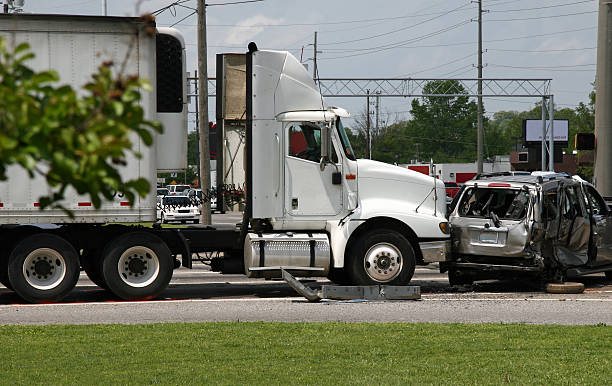
Collisions involving 80,000-pound 18-wheelers cause catastrophic damage when impacting standard passenger vehicles across Lafayette Parish. Due to the massive momentum of fully loaded commercial semi-trucks, occupants of smaller automobiles often suffer life-altering spinal injuries, traumatic brain damage, or fatal harm. Fighting interstate trucking fleets and multi-million-dollar corporate insurance carriers requires aggressive legal intervention, technical evidence extraction, and comprehensive knowledge of federal transportation standards.
At Jacqueline A. Scott & Associates, we stand up to national motor carriers and corporate legal teams trying to escape accountability. For over 35 years, lead attorney Jacqueline Scott has provided relentless representation to protect victims of tractor-trailer wrecks in Lafayette and throughout Acadiana, working tirelessly to "Make 'Em Pay" for the devastating consequences of commercial trucking crashes. Call our office today at 318-746-5997 to request your free, confidential consultation.
High-Risk 18-Wheeler Freight Corridors in Lafayette
Lafayette sits at the critical nexus of major interstate and intra-state freight lines in South Louisiana. Heavy intermodal transport carrying agricultural goods, oilfield equipment, and manufacturing materials constantly transits through congested local roadways.
High-incident tractor-trailer crash zones in Lafayette Parish include:
- Interstate 10 (I-10): A high-density transcontinental freight highway carrying thousands of long-haul semi-trucks daily, prone to catastrophic rear-end crashes and multi-vehicle pileups.
- Interstate 49 (I-49 Corridor): The primary north-south shipping line linking Lafayette to I-20 and Northern Louisiana, experiencing frequent crashes involving speeding semi-trucks and driver fatigue.
- Evangeline Thruway (US-90): A heavily industrialized corridor lined with freight terminals and distribution hubs, prone to side-swipe collisions and turning crashes involving long-wheelbase rigs.
- Ambassador Caffery Parkway (LA-3073): A major commercial artery heavily congested with local delivery trucks and 18-wheelers navigating commercial shopping zones.
- US-167 (Johnston Street Interchange): A complex transit intersection where heavy commercial traffic intersects with dense passenger car movements.
Federal Motor Carrier Safety Regulations (FMCSA) & Violations
Commercial interstate trucking operators are governed by strict federal safety mandates established under Title 49 of the Code of Federal Regulations (CFR). When motor carriers bypass these safety rules to maximize corporate profits, severe highway crashes occur.
Common FMCSA regulatory violations investigated in Lafayette 18-wheeler claims include:
- Hours-of-Service (HOS) Mandates (49 CFR Part 395): Trucking companies pushing drivers past maximum allowable driving limits, resulting in severe sleep deprivation, slowed reaction times, and microsleep at the wheel.
- Driver Qualification Standards (49 CFR Part 391): Employing commercial drivers who lack valid Commercial Driver's Licenses (CDL), possess poor driving records, or fail mandatory background checks.
- Mandatory Drug and Alcohol Testing (49 CFR Part 382): Failure by motor carriers to execute pre-employment, random, post-accident, or reasonable suspicion substance screenings.
- Vehicle Maintenance and Inspection Rules (49 CFR Part 396): Skipping mandatory periodic vehicle safety inspections, leading to operating rigs with dangerously worn brakes, bald tires, or defective lighting.
- Cargo Securement Standards (49 CFR Part 393): Failing to properly anchor, balance, or restrain heavy commercial loads, leading to jackknife incidents, tip-overs, and lost cargo hazards.
Critical Electronic Evidence Preserved in 18-Wheeler Litigation
Interstate trucking companies deploy internal crash investigation teams immediately after a major collision to protect corporate interests. Securing critical electronic and physical evidence before it is overwritten, altered, or destroyed is essential to building a solid personal injury claim.
Vital evidence components extracted in 18-wheeler crash investigations include:
- Electronic Control Module (ECM) "Black Box" Data: Digital crash logs detailing vehicle velocity, engine RPMs, brake application status, cruise control activation, and seatbelt usage prior to impact.
- Electronic Logging Devices (ELD): Automated digital logs tracking exact driver operating hours, mandatory rest periods, and duty status transitions to verify HOS compliance.
- Telematics and Fleet GPS Tracking: Real-time satellite positioning data showing vehicle location histories, sudden acceleration metrics, and hard braking events.
- Driver Qualification Files (DQF): Corporate records containing driver application materials, medical examiner certificates, annual driving record reviews, and past safety violation logs.
- Spoliation of Evidence Letters: Immediate formal legal notices served on motor carriers demanding the preservation of all physical vehicle components, dashcam footage, and electronic telemetry.
Establishing Multi-Party Corporate Liability
Unlike standard passenger vehicle collisions, tractor-trailer crashes frequently involve multiple corporate entities that share financial responsibility for a single incident.
Potentially liable parties in a Lafayette 18-wheeler lawsuit include:
- The Interstate Motor Carrier / Trucking Company: For vicarious liability, negligent hiring, improper training, or forcing drivers to exceed statutory HOS driving limits.
- The Commercial Truck Driver: For reckless operation, speeding, distracted driving, or operating while impaired by drugs or alcohol.
- Freight Loaders and Cargo Logistics Brokers: For improperly loading, overloading, or failing to secure heavy cargo within enclosed trailers or flatbeds.
- Third-Party Fleet Maintenance Contractors: For failing to properly repair critical mechanical components, such as air brake assemblies or steering linkages.
- Rig and Component Manufacturers: For structural, mechanical, or software design flaws that cause component failures on the highway.
Statutory Regulations: Comparative Fault and Filing Deadlines
18-wheeler accident litigation in Lafayette Parish is governed by statutory deadlines and comparative liability laws under the Louisiana Civil Code.
Modified Comparative Fault Standard (51% Bar Rule)
Under Louisiana Civil Code Article 2323, personal injury claims stemming from 18-wheeler collisions occurring on or after January 1, 2026, follow a modified comparative fault framework:
- 50% or Less Fault: Injured victims retain the legal right to collect financial compensation, though their total monetary recovery is reduced in proportion to their percentage of responsibility.
- 51% or More Fault: If defense attorneys establish that an injured driver bears 51% or more of the responsibility for the crash, the victim is completely barred from receiving any financial recovery.
Two-Year Liberative Prescriptive Period
Under Louisiana Civil Code Article 3493.1, personal injury actions arising from semi-truck crashes occurring on or after July 1, 2024, carry a two-year liberative prescriptive period. A formal civil lawsuit must be filed within two years of the crash date with the Clerk of Court at the 15th Judicial District Court for Lafayette Parish, located at 800 S. Buchanan Street, Lafayette, LA 70501.
Frequently Asked Questions
How does an 18-wheeler crash claim differ from a standard car accident claim?
18-wheeler cases involve complex federal safety laws (FMCSA), massive multi-million-dollar commercial insurance policies, black box telemetry data, and multiple corporate defendants working to shift liability.
What is a spoliation letter in an 18-wheeler accident case?
A spoliation letter is a formal legal demand sent to the trucking carrier requiring them to preserve all electronic black box data, ELD records, dashcam video, and physical vehicle components associated with the crash.
Where is the courthouse located for Lafayette 18-wheeler lawsuits?
Civil lawsuits for commercial tractor-trailer collisions in Lafayette Parish are filed with the Clerk of Court at the 15th Judicial District Court, located at 800 S. Buchanan Street, Lafayette, LA 70501.
What hospitals treat severe 18-wheeler crash trauma in Lafayette?
Severe injuries resulting from 18-wheeler crashes are evaluated and treated at major trauma facilities, including Ochsner Lafayette General Medical Center and Our Lady of Lourdes Regional Medical Center.
Schedule a Free Case Consultation with Jacqueline A. Scott & Associates
If you or a loved one suffered catastrophic injuries in an 18-wheeler collision in Lafayette, do not allow corporate insurance adjusters to minimize your losses. At Jacqueline A. Scott & Associates, we bring 35+ years of aggressive trial experience to confront national trucking companies, defend your rights, and Make 'Em Pay for your harm.
Call our office today at 318-746-5997 to schedule your free, confidential consultation. Let our legal team manage the fight while you focus on recovery.