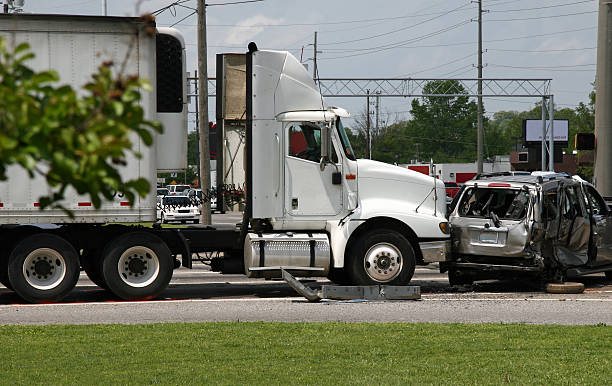
An 18-wheeler crash on a New Orleans highway or shipping route is a catastrophic event capable of upending your physical health, mental well-being, and financial security. Carrying gross vehicle weight ratings up to 80,000 pounds, fully loaded semi-trucks deliver immense impact forces upon smaller passenger vehicles. When interstate freight carriers, regional logistics operations, or tired commercial drivers sacrifice safety to meet strict delivery deadlines, victims across Orleans Parish need aggressive trial representation to level the playing field.
At Jacqueline A. Scott & Associates, we stand alongside individuals and families devastated by tractor-trailer wrecks. For over 35 years, lead attorney Jacqueline Scott has taken on multinational trucking corporations, self-insured freight fleets, and tough defense lawyers with an unyielding commitment to "Make 'Em Pay" for the harm they cause. Call our team today at 318-746-5997 to schedule your free, confidential case evaluation.
Dangerous 18-Wheeler Corridors and High-Risk Zones in New Orleans
Heavy intermodal shipping and interstate traffic converge across New Orleans, creating severe hazard zones where massive semi-trucks mix with commuter traffic.
Dangerous commercial freight routes in Orleans Parish include:
- Interstate 10 & High Rise Bridge: High-elevation span over the Industrial Canal featuring steep gradients, tight lanes, and strong wind gusts where jackknife incidents and rear-end collisions occur.
- I-610 Loop & I-10 Interchange: Major interstate freight bypass heavily traveled by long-haul rigs, where rapid lane changes, severe blind spots, and speed discrepancies cause side-swipe collisions and rollovers.
- Crescent City Connection (U.S. 90 Business): Twin cantilever bridges crossing the Mississippi River with heavy daily commercial traffic, creating dangerous conditions for brake failures and multi-vehicle pileups.
- Tchoupitoulas Street & Port of New Orleans Gate Entrances: Primary drayage corridors where heavy container trucks, flatbeds, and chassis rigs make sharp turns, leading to dangerous squeeze crashes and broadside impacts.
- North Claiborne Avenue (LA-39) & Florida Avenue Intermodals: Heavy industrial arterial routes where big rigs operate alongside local passenger vehicles, streetcars, and pedestrians.
- Chef Menteur Highway (U.S. 90) & Downman Road: East New Orleans commercial routes lined with truck stops, freight depots, and warehouse distribution centers prone to high-speed intersection crashes.
Complex Liability in 18-Wheeler Wrecks
Determining financial responsibility in an 18-wheeler wreck involves navigating complex corporate structures and federal transportation regulations. Multiple parties often share legal liability for a single crash.
Potentially liable entities in semi-truck accident litigation:
- Trucking Company / Motor Carrier: Liable for pressuring drivers to violate safety rules, negligent hiring, failing to verify Commercial Driver's Licenses (CDL), or ignoring driver fatigue warnings.
- Commercial Truck Driver: Responsible for distracted driving, speeding, operating while impaired by drugs or alcohol, tailgating, or exceeding federal driving time limits.
- Cargo Loaders and Logistics Operators: Liable for unbalancing, overloading, or improperly securing cargo, which can cause trailer sway, cargo spills, or rollover accidents.
- Third-Party Fleet Maintenance Providers: Responsible for improper repairs or failing to replace worn brake pads, bald tires, defective steering linkages, or faulty trailer hitches.
- Equipment Manufacturers: Liable for manufacturing or design defects in critical vehicle components like hydraulic lines, tire treads, or electronic control modules.
Preserving Critical Digital and Physical Evidence
Commercial trucking companies deploy rapid-response defense teams immediately following a severe crash. Securing critical evidence before it can be destroyed or overwritten is essential to building a solid claim.
Vital evidence our firm moves quickly to preserve:
- Spoliation Demand Letters: Official legal notices sent immediately to the motor carrier and its insurer mandating the preservation of all physical, digital, and mechanical evidence.
- Electronic Control Module (ECM) Data: The 18-wheeler's "black box" that logs crucial metrics such as driving speeds, hard braking events, throttle position, and engine fault codes before impact.
- Electronic Logging Device (ELD) Records: Digital logs recording driver duty status, rest breaks, and continuous driving hours to confirm Federal Motor Carrier Safety Administration (FMCSA) violations.
- Driver Qualification Files (DQF): Records containing background check reports, drug and alcohol test results, medical examiner certificates, and prior safety violations.
- Dashcam Footage and GPS Telematics: Video recordings from forward-facing or cab-mounted cameras alongside satellite tracking data and real-time dispatch messages.
Federal Motor Carrier Safety Administration (FMCSA) Rules
Interstate 18-wheeler operations are governed by strict federal safety mandates under Title 49 of the Code of Federal Regulations (49 CFR).
Key FMCSA regulations enforced in commercial trucking claims:
- Hours of Service (49 CFR Part 395): Limits property-carrying drivers to a maximum of 11 hours of driving within a 14-hour window following 10 consecutive hours off duty.
- Mandatory Drug and Alcohol Testing (49 CFR Part 382): Mandates pre-employment, random, post-accident, and reasonable-suspicion drug and alcohol screenings for all CDL holders.
- Inspection and Maintenance Standards (49 CFR Part 396): Requires motor carriers to perform systematic inspections, keep detailed repair records, and immediately repair unsafe equipment.
- Cargo Securement Standards (49 CFR Part 393): Establishes strict standards for securing heavy freight to prevent load shifts that cause jackknife crashes and rollovers.
Louisiana Legal Rules: Modified Fault and Deadlines
18-wheeler accident litigation in New Orleans requires adherence to specific Louisiana civil codes governing fault distribution and statutory filing periods.
Modified Comparative Fault (51% Bar Rule)
Under Louisiana Civil Code Article 2323, semi-truck collisions occurring on or after January 1, 2026, follow a modified comparative fault rule:
- 50% or Less Fault: Injured victims retain the legal right to collect financial compensation, though their monetary recovery is reduced in proportion to their percentage of responsibility.
- 51% or More Fault: If trucking defense attorneys prove an injured motorist bears 51% or more of the fault, the victim is completely barred from receiving any financial recovery.
Insurance adjusters routinely attempt to place 51% or more of the blame on passenger vehicle drivers. We combat these strategies by retaining independent crash reconstruction engineers, analyzing black box data, and subpoenaing witness statements.
Two-Year Liberative Prescriptive Period
Under Louisiana Civil Code Article 3493.1, personal injury actions arising from crashes occurring on or after July 1, 2024, carry a two-year liberative prescriptive period. A formal civil lawsuit must be filed within two years of the crash date with the Clerk of Court at the Civil District Court for the Parish of Orleans, located at 421 Loyola Avenue, Room 402, New Orleans, LA 70112.
Frequently Asked Questions
Why is black box data so critical after an 18-wheeler crash in New Orleans?
The trailer's Electronic Control Module (ECM) captures essential objective evidence, including exact vehicle speeds, braking intensity, and steering inputs in the seconds leading up to the crash.
How long do I have to file an 18-wheeler injury lawsuit in Orleans Parish?
Under Louisiana Civil Code Article 3493.1, you have exactly two years from the date of the accident to file a formal civil lawsuit for crashes occurring on or after July 1, 2024.
Where is the courthouse for filing semi-truck injury lawsuits in New Orleans?
Lawsuits for crashes occurring within Orleans Parish are filed with the Clerk of Court at the Civil District Court for the Parish of Orleans, located at 421 Loyola Avenue, New Orleans, LA 70112.
What law enforcement agencies investigate 18-wheeler accidents in New Orleans?
Accident investigations and formal crash reports are handled by the New Orleans Police Department (NOPD), Orleans Parish Sheriff's Office (OPSO), or Louisiana State Police Troop B (and Troop NOLA).
Contact Jacqueline A. Scott & Associates for New Orleans 18-Wheeler Claims
If you or a loved one sustained severe injuries in an 18-wheeler collision in New Orleans, secure experienced trial counsel immediately. At Jacqueline A. Scott & Associates, we bring 35+ years of litigation experience to confront massive commercial freight carriers, hold negligent trucking companies accountable, and Make 'Em Pay for your losses.
Call our legal team today at 318-746-5997 to schedule your free, confidential consultation. Let our firm protect your rights, demand vital black box evidence, and fight for full financial compensation.