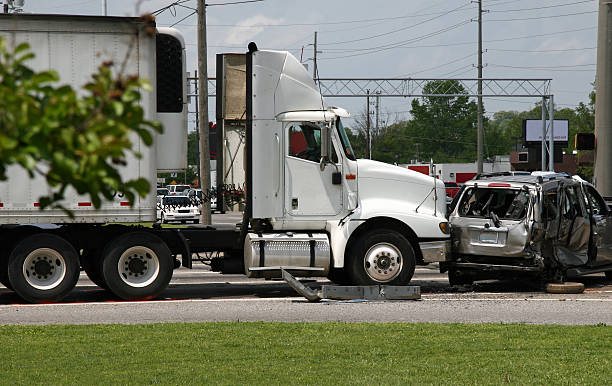
A collision with a fully loaded 80,000-pound 18-wheeler on a Baton Rouge highway is a life-altering event. The extreme physical impact generated by a commercial tractor-trailer can crush standard passenger vehicles, leaving occupants with permanent, catastrophic injuries, overwhelming medical debt, and sudden loss of household income.
At Jacqueline A. Scott & Associates, we deliver aggressive, uncompromising legal representation to victims of 18-wheeler crashes across East Baton Rouge Parish. For over 35 years, attorney Jacqueline Scott and her team have taken on national trucking conglomerates and corporate insurance carriers to secure the maximum compensation our clients deserve. Call us today at 318-746-5997 to schedule a free, confidential case consultation.
Dangerous 18-Wheeler Transit Corridors in Baton Rouge
Baton Rouge sits at a vital crossroad of Gulf Coast freight commerce. Dense interstate traffic, ongoing road construction, and heavy commercial transport merging across river crossings regularly trigger severe 18-wheeler accidents.
High-risk corridors for tractor-trailer crashes across Baton Rouge:
- Interstate 10 / Interstate 12 Split: Highly congested merge zone where long-haul semi-trucks change lanes rapidly amidst dense commuter traffic, leading to violent rear-end collisions and side-impact crashes.
- Horace Wilkinson Bridge (I-10 Mississippi River Bridge): High-elevation river crossing featuring narrow lanes and steep inclines, where sudden traffic slowdowns cause devastating underride collisions and multi-vehicle pileups.
- Airline Highway (U.S. 61) Commercial Corridor: Heavy freight bypass running alongside industrial suppliers, distribution hubs, and busy retail centers with dangerous turning movements.
- U.S. Route 190 (Florida Boulevard) & Choctaw Drive: Key industrial corridors heavily utilized by 18-wheelers carrying raw manufacturing materials, machinery, and timber.
- Port of Greater Baton Rouge Access Routes: Freight corridors along the Mississippi River where intermodal container trucks and heavy tankers enter and exit industrial shipping facilities.
Federal Safety Regulations and 18-Wheeler Violations
Commercial semi-truck operations are strictly regulated by the Federal Motor Carrier Safety Administration (FMCSA) and the Louisiana Department of Transportation and Development (DOTD). When motor carriers bypass federal mandates to maximize corporate profits, severe accidents happen.
Common FMCSA regulatory violations establishing corporate liability:
- Hours-of-Service (HOS) Violations (49 CFR Part 395): Drivers exceeding mandatory driving limits or skipping required rest breaks, leading to severe fatigue, micro-sleep episodes, and delayed braking reactions.
- Falsification of Electronic Logging Device (ELD) Data: Motor carriers or drivers altering digital drive-time logs to conceal illegally long shifts and meet aggressive delivery windows.
- Improper Cargo Loading and Weight Exceedances (49 CFR Part 393): Unbalanced, un-anchored, or overweight freight causing tractor-trailer jackknifing, rollover crashes, or catastrophic cargo spills on high-speed roadways.
- Negligent Fleet Maintenance (49 CFR Part 396): Failure to inspect, repair, or maintain critical 18-wheeler safety systems, including air brakes, steering linkages, lighting, and tire tread depth.
- Driver Qualification Violations (49 CFR Part 391): Employing commercial drivers without proper CDL endorsements, adequate behind-the-wheel training, or required medical certifications.
Uncovering All Liable Parties in an 18-Wheeler Wreck
Unlike standard auto accident claims, 18-wheeler litigation involves complex corporate structures. Identifying every entity responsible for operating, loading, and maintaining the semi-truck is essential for securing complete financial recovery.
Potentially liable parties in semi-truck accident claims:
- The Truck Driver: Direct liability for speeding, distracted driving, driving under the influence, tailgating, or failing to adjust to weather conditions.
- The Trucking Company / Freight Carrier: Direct and vicarious liability for negligent hiring, forcing drivers to violate HOS rules, failing to conduct background checks, and deferring fleet maintenance.
- Cargo Owners and Shipping Brokers: Third-party logistics facilities responsible for improperly loading, securing, or overloading cargo trailers beyond legal weight limits.
- Maintenance and Repair Vendors: Independent mechanical shops that performed substandard repairs or signed off on unsafe brake, tire, or engine components.
- Parts and Component Manufacturers: Equipment manufacturers responsible for defective braking systems, tire blowouts, or structural trailer failures.
Preserving Critical Digital and Physical Evidence
Interstate trucking companies deploy immediate accident response teams to the crash site to secure evidence and limit financial liability. Vital digital evidence stored inside the 18-wheeler can be overwritten or legally destroyed if formal action is not taken immediately.
Evidence secured by our legal team through formal Spoliation Demand Letters:
- Engine Control Module (ECM) / Black Box Data: Digital records capturing exact vehicle speed, braking deceleration, engine RPMs, throttle position, and steering input seconds before impact.
- Electronic Logging Device (ELD) Records: Digital satellite time tracking data confirming whether the driver violated federal fatigue regulations.
- In-Cab Dashcam Footage & GPS Telematics: Video recordings and real-time location tracking showing driver behavior, lane position, and driving conditions leading up to the crash.
- Driver Qualification File (DQF): Carrier background files detailing the driver's CDL history, drug and alcohol testing records, prior accident history, and safety violations.
- Maintenance & Inspection Logs: Detailed service records showing brake adjustments, tire replacements, and state safety inspection compliance.
Louisiana's 2026 Legal Framework: Comparative Fault and Deadlines
Litigating an 18-wheeler accident claim in East Baton Rouge Parish requires strict adherence to Louisiana civil law procedures regarding liability and court filing deadlines.
Modified Comparative Fault Standard
For 18-wheeler accidents occurring on or after January 1, 2026, Louisiana enforces a modified comparative fault rule under Louisiana Civil Code Article 2323:
- 50% or Less Fault: You remain entitled to financial compensation, but your total recovery is reduced in direct proportion to your assigned percentage of fault.
- 51% or More Fault: If an investigation or court determines you were 51% or more at fault for the crash, you are legally barred from receiving any financial recovery from the trucking company or driver.
Commercial trucking insurers aggressively attempt to assign 51% or more of the blame to injured motorists to avoid paying high-value claims. Our legal team counters these tactics by working with independent accident reconstruction engineers, trucking safety experts, and black box analysts.
Liberative Prescriptive Period (Statute of Limitations)
Under Louisiana Civil Code Article 3493.1, you have two years from the date of the collision to file a personal injury lawsuit for injuries sustained on or after July 1, 2024. Formal legal filings must be submitted to the Clerk of Court at the 19th Judicial District Court (East Baton Rouge Parish Courthouse) located at 222 St. Louis Street in downtown Baton Rouge.
Frequently Asked Questions
What makes an 18-wheeler accident different from a standard car crash?
18-wheeler crashes involve massive commercial insurance policies, complex federal FMCSA regulations, multi-layered corporate liability, and sophisticated digital black box data that require immediate legal preservation.
How soon after an 18-wheeler crash should I hire a lawyer?
You should contact an attorney immediately. Trucking companies send investigators to crash scenes within hours, and critical ECM/black box data can be overwritten in as little as 30 days unless a formal legal spoliation letter is served.
Where is an 18-wheeler lawsuit filed in East Baton Rouge Parish?
Civil lawsuits for semi-truck crashes occurring within East Baton Rouge Parish are filed at the 19th Judicial District Court Courthouse, located at 222 St. Louis Street in downtown Baton Rouge.
What law enforcement agencies investigate 18-wheeler crashes in Baton Rouge?
Crash reports are prepared by local agencies including the Baton Rouge Police Department (BRPD), East Baton Rouge Parish Sheriff's Office (EBRSO), or commercial vehicle enforcement officers from Louisiana State Police Troop A.
Contact Jacqueline A. Scott & Associates for Baton Rouge Legal Representation
If you or a loved one has been injured in a collision with an 18-wheeler in Baton Rouge, do not fight corporate trucking carriers and their insurance adjusters alone. At Jacqueline A. Scott & Associates, we bring over 35 years of aggressive litigation experience to fighting for maximum compensation for injured victims across South Louisiana.
Call us today at 318-746-5997 to schedule your free, confidential case evaluation. Let our firm protect your rights, demand vital black box evidence, and fight to secure the financial recovery you deserve.