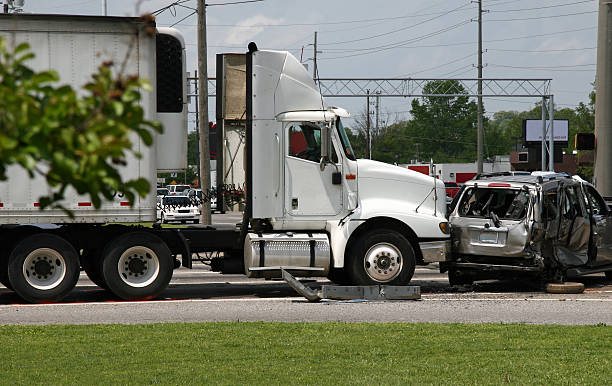
A collision with a heavy commercial truck or semi-rig in Baton Rouge often results in catastrophic injuries, permanent disability, or severe financial crisis. Commercial trucks weighing up to 80,000 pounds generate immense impact forces that demolish standard passenger vehicles, leaving victims in East Baton Rouge Parish to face long hospitalizations, lost income, and aggressive defense strategies from corporate trucking insurers.
At Jacqueline A. Scott & Associates, we deliver relentless legal representation for commercial truck crash victims throughout Baton Rouge and South Louisiana. For over 35 years, our legal team has stood up to major motor carriers and corporate insurance fleets to secure full financial recovery for our clients. Call us directly at 318-746-5997 to schedule a free, confidential case evaluation.
High-Risk Commercial Freight Corridors in Baton Rouge
Baton Rouge serves as a vital Gulf Coast logistics crossroad, connecting interstate commercial trucking routes with major industrial chemical plants and port facilities along the Mississippi River. Continuous heavy freight movements create high risks for severe commercial vehicle accidents.
Dangerous transit zones for commercial truck crashes in Baton Rouge:
- Interstate 10 & Interstate 12 Split: Highly congested interchange where heavy long-haul tractor-trailers merge across multiple lanes, leading to high-speed rear-end collisions and sideswipe crashes.
- Horace Wilkinson Bridge (I-10 Mississippi River Bridge): Elevated multi-lane river crossing with minimal shoulder space, where stalled or speeding semi-trucks trigger multi-vehicle pileups and underride collisions.
- Airline Highway (U.S. 61) Industrial Belt: Major commercial corridor heavily traveled by gravel haulers, flatbeds, and local delivery fleets intersecting high-density retail traffic.
- Port of Greater Baton Rouge Corridors: Heavy freight routes surrounding port facilities on the Mississippi River, featuring continuous intermodal truck traffic, heavy container rigs, and oversized loads.
- U.S. Route 190 (Florida Boulevard) & Choctaw Drive: Industrial corridors lined with manufacturing plants, chemical processing facilities, and distribution warehouses where heavy trucks frequently turn across fast-moving traffic.
Federal Regulations and Commercial Trucking Violations
Unlike standard car accident claims, commercial truck accident investigations involve enforcing strict federal safety standards established by the Federal Motor Carrier Safety Administration (FMCSA) and the Louisiana Department of Transportation and Development (DOTD).
Common FMCSA regulatory violations that establish carrier negligence:
- Hours-of-Service (HOS) Breaches (49 CFR Part 395): Commercial drivers exceeding the 11-hour driving limit or 14-hour duty window, leading to severe driver fatigue and delayed reaction times.
- Electronic Logging Device (ELD) Tampering: Falsifying electronic logbook entries or failing to record actual driving hours to meet unrealistic corporate delivery deadlines.
- Failure to Conduct Mandatory Drug and Alcohol Screenings (49 CFR Part 382): Trucking companies hiring drivers without required pre-employment drug screenings or failing to execute post-accident substance testing.
- Improper Cargo Securement (49 CFR Part 393): Unbalanced, overweight, or improperly tied-down freight causing cargo shifts, trailer jackknifes, rollover crashes, or spilled highway hazards.
- Inadequate Vehicle Maintenance (49 CFR Part 396): Motor carriers neglecting routine brake inspections, operating on worn tires, or failing to repair known steering line defects.
Identifying Multiple Liable Parties in a Commercial Truck Wreck
Determining liability in a commercial truck crash requires looking beyond the truck driver. A thorough investigation frequently reveals multiple corporate entities whose combined negligence caused the collision.
Potentially liable parties in commercial truck claims:
- The Commercial Truck Driver: Direct liability for reckless driving, speeding, distracted driving, driving under the influence, or violating traffic safety laws.
- The Trucking Company / Motor Carrier: Direct and vicarious liability for negligent hiring practices, inadequate driver training, forcing drivers to violate HOS rules, or deferred fleet maintenance.
- Cargo Owners and Freight Loaders: Third-party logistics facilities or shipping companies responsible for over-packing trailers, exceeding axle weight limits, or failing to secure heavy cargo.
- Maintenance and Repair Contractors: Third-party mechanical shops that performed substandard brake, tire, or engine maintenance on the commercial fleet.
- Truck and Parts Manufacturers: Companies that designed or manufactured defective vehicle components, such as faulty braking systems, defective tires, or steering assembly failures.
Critical Evidence to Preserve Immediately After a Truck Crash
Trucking companies deploy rapid-response defense teams to accident scenes immediately following a major crash to protect their own interests. Vital electronic data and physical evidence can disappear or be legally destroyed if action is not taken quickly.
Key evidence our firm secures through formal Spoliation Letters:
- Black Box / Engine Control Module (ECM) Data : Digital records capturing precise vehicle speed, brake application times, throttle position, gear selection, and steering input seconds prior to impact.
- Electronic Logging Device (ELD) Data : Digital time logs proving whether the truck driver was operating in direct violation of federal fatigue laws.
- Dashcam Footage and Telematics: Video recordings and GPS satellite tracking data documenting driver behavior, lane position, and driving speed.
- Driver Qualification Files (DQF): Carrier background records detailing the driver's commercial driver's license (CDL) status, driving history, safety violations, and medical certification.
- Fleet Maintenance and Inspection Records: Comprehensive service histories showing whether brake pads, tires, air lines, and lighting systems met state and federal safety standards.
Louisiana's 2026 Legal Framework: Comparative Fault and Deadlines
Truck accident litigation in East Baton Rouge Parish is strictly governed by Louisiana civil laws regarding comparative negligence and filing deadlines.
Modified Comparative Fault Standard
For commercial truck accidents occurring on or after January 1, 2026, Louisiana enforces a modified comparative fault rule under Louisiana Civil Code Article 2323:
- 50% or Less Fault: You can recover financial compensation for your injuries, but your total recovery is reduced by your assigned percentage of fault.
- 51% or More Fault: If a jury or court determines you were 51% or more at fault for the crash, you are legally barred from recovering any financial damages from the trucking company or driver.
Corporate insurance adjusters aggressively attempt to frame crash narratives to assign injured motorists 51% or more of the blame. Our legal team counters these tactics by working with independent accident reconstruction engineers and highway safety experts.
Liberative Prescriptive Period (Statute of Limitations)
Under Louisiana Civil Code Article 3493.1, you have two years from the date of the collision to file a personal injury lawsuit for injuries sustained on or after July 1, 2024. Formal legal filings must be submitted to the Clerk of Court at the 19th Judicial District Court (East Baton Rouge Parish Courthouse) located at 222 St. Louis Street in downtown Baton Rouge.
Frequently Asked Questions
Why are commercial truck accident claims more complex than regular car accident cases?
Truck claims involve higher insurance policy limits, complex federal FMCSA regulations, multiple corporate defendants, and sophisticated electronic data systems that require immediate legal preservation.
How soon after a truck crash should I send a spoliation letter?
A spoliation letter should be sent immediately. Federal law allows motor carriers to overwrite or dispose of certain electronic logbook records after six months unless a formal legal demand is served to preserve the evidence.
Where is a truck accident lawsuit handled in East Baton Rouge Parish?
Civil lawsuits arising from truck accidents in Baton Rouge are handled at the 19th Judicial District Court, located at 222 St. Louis Street in downtown Baton Rouge.
What law enforcement agencies investigate commercial truck crashes in Baton Rouge?
Crash reports are prepared by local agencies including the Baton Rouge Police Department (BRPD), East Baton Rouge Parish Sheriff's Office (EBRSO), or commercial enforcement officers from Louisiana State Police Troop A.
Contact Jacqueline A. Scott & Associates for Baton Rouge Legal Representation
If you or a family member has been injured in a commercial truck collision in Baton Rouge, do not confront corporate trucking companies and their insurers alone. At Jacqueline A. Scott & Associates, we bring over 35 years of aggressive trial experience to holding negligent motor carriers accountable.
Call us today at 318-746-5997 to schedule your free, confidential consultation. Let our legal team protect your rights, secure critical crash evidence, and fight for the full financial compensation you deserve.