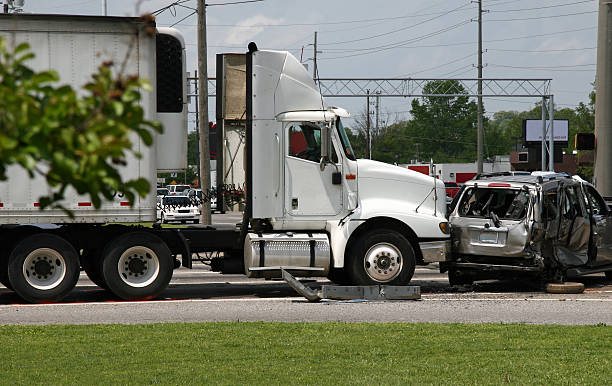
After a serious 18-wheeler accident, skid marks, vehicle damage, photographs, and witness statements can provide important information about what happened. But some of the most useful evidence may be stored electronically inside the commercial truck.
Many commercial trucks contain electronic control systems that monitor the vehicle while it is operating. Depending on the truck and its equipment, these systems may store information about speed, engine activity, braking, throttle use, and other vehicle operations.
This information is often referred to as ECM or "black box" data, and it can become an important part of investigating a serious truck accident in Louisiana.
What Is a Truck's ECM or "Black Box"?
An Engine Control Module (ECM) is an electronic computer that controls and monitors various functions of a commercial truck's engine. Its primary purpose is operating and monitoring engine systems—not investigating accidents.
However, some ECMs and other electronic systems on heavy trucks have the ability to store information that may be useful after a collision.
The term "black box" is commonly used when discussing this type of evidence, but it is not a precise description of one specific device found in every commercial truck. Depending on the make, model, year, engine, and equipment, crash-related information may be stored in an ECM or another electronic module or system.
For this reason, an attorney investigating a commercial truck accident should determine what electronic systems were actually installed on the truck and what information those systems may have recorded.
What Information Can a Truck's ECM Record?
The information available varies considerably from one commercial truck to another.
Depending on the vehicle and system, electronically stored information may include:
- Vehicle Speed: The truck's recorded speed before or around a triggering event.
- Brake Status: Whether the system indicated that the brake was being applied.
- Throttle or Accelerator Position: Information that may indicate whether the driver was accelerating or had released the accelerator.
- Engine RPM: How fast the engine was operating at particular points in time.
- Clutch or Other System Status: Certain systems may record additional driver or vehicle inputs.
- Sudden Deceleration or Hard-Stop Events: Some systems can preserve information when the truck experiences a qualifying rapid change in speed.
Not every truck records every one of these items, and the amount of information available can depend on the manufacturer's system and how it was configured.
This is why an attorney should avoid assuming that a truck's "black box" contains a particular piece of evidence until the vehicle and its electronic systems have been properly identified and examined.
How Is Black Box Data Used After a Truck Accident?
Electronic truck data can provide another source of evidence about what the vehicle was doing before a collision.
For example, a truck driver may report that the truck was traveling at a certain speed or that the brakes were applied before impact. If the truck contains electronically stored event information, investigators may be able to compare the driver's account with the available vehicle data.
Depending on the system, electronic records may help answer questions such as:
How fast was the truck traveling?
Was the accelerator being applied or released?
Was the brake system showing a brake application?
Did the truck experience a sudden deceleration event?
What was happening with the engine before or around the event?
This information may be especially useful when combined with physical evidence from the crash scene.
Does Black Box Data Prove How an Accident Happened?
Not by itself.
Electronic data can be extremely useful in a truck accident investigation, but it should be analyzed together with the other available evidence.
An accident reconstruction expert may compare electronic vehicle data with skid or tire marks, photographs, vehicle damage, roadway measurements, surveillance or dash-camera footage, witness statements, police reports, GPS information, and other evidence.
The electronic data also needs to be interpreted correctly.
For example, a recorded speed value should not automatically be treated as perfectly accurate without considering how that particular system obtains and stores vehicle-speed information. Tire size, wheel slip, system configuration, equipment limitations, and other factors may affect the interpretation of certain data.
For this reason, black box evidence is better viewed as one important piece of the accident reconstruction, rather than unquestionable proof of exactly what occurred.
Is an ECM the Same as an ELD?
No.
An Electronic Logging Device (ELD) is primarily used to record information related to a commercial driver's driving time and duty status for Hours-of-Service compliance.
An ECM, on the other hand, primarily controls and monitors engine operations. Some ECMs may also store vehicle information that can be useful in a crash investigation.
Other electronic systems installed on a commercial truck may contain additional information.
For example, depending on the vehicle, investigators may also look for data from GPS or fleet telematics systems, collision-avoidance systems, electronic braking systems, dash cameras, and other onboard technology.
A thorough truck accident investigation may therefore involve several different electronic systems, not simply one "black box."
How Is ECM or Black Box Data Retrieved?
Retrieving electronic data from a commercial truck can require specialized equipment, software, and technical knowledge.
The process depends on the manufacturer and the electronic system being examined. Investigators or qualified technicians may connect directly to the truck or electronic module using compatible hardware and software to retrieve available information.
In some cases, a module may be damaged during the collision, which can make recovering the information more complicated.
Once the data is retrieved, it must still be properly interpreted. An accident reconstruction expert or other qualified professional may analyze the information and compare it with the physical evidence from the crash.
Why Should Black Box Evidence Be Preserved Quickly?
Electronic evidence can be time-sensitive.
Depending on the system, stored information may be overwritten, altered through continued vehicle operation, affected by subsequent events, or become more difficult to retrieve if the truck is repaired or returned to service.
For that reason, an attorney may send a preservation or spoliation letter notifying the trucking company and other appropriate parties that the truck and relevant electronic evidence should be preserved.
A preservation request may include more than ECM information. Depending on the circumstances, an attorney may request preservation of:
- ECM and available event data;
- ELD records;
- GPS and telematics information;
- dash-camera footage;
- collision-avoidance system data;
- electronic braking system information;
- driver communications;
- dispatch records;
- maintenance and inspection records; and
- other electronically stored information related to the truck and collision.
Sending a preservation letter does not guarantee that every piece of evidence will be available. However, taking steps to identify and preserve potentially relevant evidence early can be important in a serious commercial truck accident investigation.
Can a Trucking Company Delete Black Box Data?
Electronic data may be lost for several reasons. Depending on the system, information may be overwritten through normal operation, replaced by later events, affected by repairs, or lost if electronic components are damaged.
Once a party has a legal duty to preserve relevant evidence, intentionally destroying or failing to preserve evidence can raise serious legal issues.
That is another reason attorneys handling commercial truck accident cases may act quickly to identify the truck, its electronic systems, and the evidence that should be preserved.
Who Owns the Data in a Truck's Black Box?
The answer can depend on the circumstances, including ownership of the truck, the particular electronic system, applicable agreements, and governing law.
A trucking company may own or control the truck and certain records, but that does not necessarily mean an injured person or their attorney can simply access the vehicle and download its electronic information.
Obtaining the data may require cooperation from the appropriate party, a formal request, discovery after litigation begins, a court order, or another appropriate legal process.
An attorney can determine which preservation and discovery methods are appropriate based on the facts of the case.
Why Does Electronic Evidence Matter in a Louisiana Truck Accident Case?
A serious truck accident can involve competing accounts of what happened.
Electronic evidence can help provide an additional, data-based source of information.
Suppose a driver reports that the truck was slowing before a collision. Depending on the truck's systems, available electronic data may provide information about vehicle speed, accelerator position, brake status, engine RPM, or other activity during the period surrounding an event.
But that information should not be used to jump to conclusions.
For example, evidence showing no recorded brake application before impact does not automatically prove that the driver was asleep or distracted. Investigators would still need to examine the circumstances and other evidence before determining why the driver did not brake.
The value of electronic evidence is that it can help attorneys and reconstruction experts test different explanations of how the accident occurred against objective vehicle information.
Injured in an 18-Wheeler Accident in Louisiana?
Commercial truck accident cases can involve evidence that does not exist in an ordinary passenger-vehicle claim. Understanding what electronic systems were installed on the truck—and preserving the information they may contain—can be an important part of investigating the collision.
At Jacqueline Scott & Associates, we investigate the circumstances surrounding serious commercial truck accidents and work to identify evidence that may help determine how the collision occurred and who may be responsible.
If you or a loved one has been injured in an 18-wheeler or commercial truck accident in Shreveport, Bossier City, or elsewhere in Louisiana, contacting an attorney early can help protect the opportunity to identify and preserve important evidence.
The truck's electronic systems may contain valuable information, but determining what was recorded, preserving it, and interpreting it correctly requires a careful investigation.