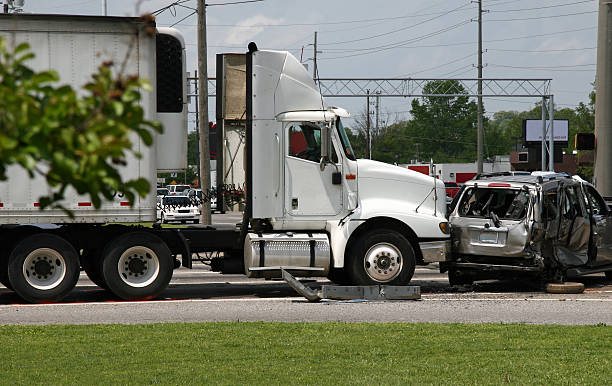
Commercial motor carriers have responsibilities when selecting drivers to operate covered commercial vehicles. Depending on the driver and operation, federal regulations establish minimum qualifications and require motor carriers to obtain and maintain certain information concerning their drivers.
After a serious 18-wheeler accident in Louisiana, these records can become an important part of the investigation.
A driver's Driver Qualification File (DQF) may help an attorney determine whether applicable federal qualification requirements were followed and whether the motor carrier had information about the driver's history or qualifications that may be relevant to the collision.
What Is a Driver Qualification File?
A Driver Qualification File is a collection of records that a motor carrier must maintain for drivers who are subject to the applicable federal driver-qualification requirements.
The requirements are primarily found in 49 C.F.R. Part 391, including § 391.51.
The file helps document whether the motor carrier completed required qualification procedures and whether the driver satisfied applicable federal requirements to operate the commercial vehicle.
Not every person who drives a vehicle for a business is necessarily subject to the same federal qualification requirements. Applicability can depend on the type of vehicle, operation, interstate commerce, and other circumstances.
For that reason, an attorney investigating a truck accident should first determine which federal and state qualification requirements applied to the particular driver and motor carrier.
What Records May Be Included in a Driver Qualification File?
Federal regulations identify specific records that motor carriers must maintain for covered drivers.
Depending on the driver and circumstances, a DQF may contain or be associated with records such as:
Driver's Employment Application
Motor carriers subject to the applicable regulations generally must obtain a qualifying application for employment from the driver.
The application contains information about the driver's identity, licensing, driving experience, employment history, and other information required by federal regulations.
The application can help establish what information the driver provided when seeking the commercial driving position.
Motor Vehicle Records
Motor Vehicle Records, commonly called MVRs, contain information maintained by state driver-licensing authorities.
Depending on the applicable requirements and time period involved, motor carriers may be required to obtain MVR information as part of the driver qualification process.
These records can provide information concerning the driver's license status and driving history.
After an accident, an attorney may compare the information available to the motor carrier with the company's decision to qualify or continue using the driver.
Prior Employer Safety Performance Information
Federal regulations may require a prospective motor carrier to investigate certain safety-performance information from a driver's previous employers.
Depending on the circumstances, these investigations can involve information concerning prior crashes and other safety-related history required by the regulations.
Drug and alcohol testing information is subject to additional federal requirements and recordkeeping procedures and should not simply be treated as an ordinary document contained in every DQF.
These records may become important when determining what information was available to the motor carrier before the driver began operating its commercial vehicles.
Medical Qualification Information
Covered commercial drivers generally must satisfy applicable physical-qualification requirements.
Medical qualification procedures are governed by federal regulations, and examinations generally must be performed by qualified medical examiners in accordance with applicable FMCSA requirements.
However, the recordkeeping rules involving Medical Examiner's Certificates have changed, particularly for CDL drivers whose medical certification information is transmitted electronically through state licensing systems.
For that reason, an attorney should determine which medical qualification and recordkeeping requirements applied to the driver on the date of the accident rather than assuming a paper medical card was required to be physically maintained in every DQF.
Road Test or Equivalent Documentation
Federal regulations generally require covered drivers to successfully complete a road test unless an applicable exception allows qualifying equivalent documentation.
When required, the motor carrier maintains documentation showing that the driver satisfied the road-test requirement.
This can become relevant when investigating whether the company properly evaluated a driver's ability to operate the type of commercial vehicle involved.
Other Qualification Records
Depending on the circumstances and applicable regulations, additional documentation may be required to establish that the driver remained qualified.
An attorney reviewing a DQF should therefore examine not only what the file contains but also what should have been maintained under the regulations applicable at the relevant time.
What Can a Driver Qualification File Reveal After an Accident?
A DQF does not automatically establish that a trucking company was negligent.
Instead, it provides another source of evidence concerning the driver's qualifications and the motor carrier's compliance with applicable requirements.
For example, an attorney may examine whether:
- the driver held the required license;
- the motor carrier obtained required driving-history information;
- required prior-employer inquiries were completed;
- the driver satisfied applicable medical qualification requirements;
- required road-test documentation existed;
- the company had information raising legitimate safety concerns; or
- required qualification records were missing.
If problems are discovered, the next question is whether those problems had any connection to the collision.
A missing document by itself does not necessarily mean the missing information caused the accident.
What Is Negligent Hiring or Retention?
Depending on the facts and applicable Louisiana law, the conduct of a motor carrier in hiring or retaining a driver may become an issue in a truck accident case.
For example, an investigation may reveal that information available before hiring raised questions about whether a driver was qualified or safe to perform the particular job.
Similarly, information learned during employment may raise questions about whether continuing to allow the driver to operate commercial vehicles was reasonable.
These issues are sometimes described as negligent hiring, supervision, or retention.
However, the existence of a prior ticket, crash, or other negative information does not automatically mean the trucking company was prohibited from hiring the driver.
An attorney must examine the nature of the driver's history, applicable federal requirements, what the company knew or should have known, what actions it took, and whether any failure contributed to the accident.
Does a Driver Qualification File Include Drug and Alcohol Test Results?
This issue requires an important distinction.
Commercial driver drug and alcohol testing is governed primarily by 49 C.F.R. Parts 40 and 382, and those regulations contain their own requirements concerning testing, confidentiality, access, and record retention.
Drug and alcohol testing records should therefore not automatically be described as ordinary contents of the driver's DQF.
Depending on the accident and driver, an attorney may separately investigate whether applicable drug and alcohol testing requirements were followed and seek relevant information through appropriate legal procedures.
Do Owner-Operators Have Driver Qualification Requirements?
Potentially, yes.
A self-employed owner-operator operating as a motor carrier may have responsibilities under the Federal Motor Carrier Safety Regulations that apply both to the carrier and to the driver.
FMCSA regulations generally do not allow an owner-operator to avoid applicable driver qualification requirements simply because the individual is self-employed.
However, whether particular requirements apply depends on the vehicle, operation, and applicable regulations.
How Long Are Driver Qualification Records Kept?
Different records have different federal retention requirements.
Under 49 C.F.R. § 391.51, a motor carrier generally must maintain a driver's qualification file for as long as the driver is employed and for three years after the driver's employment ends.
However, the regulation also provides different retention treatment for certain individual documents.
This distinction matters after an accident because an attorney should not assume that every document connected with the driver must be retained for exactly the same period.
The applicable regulation, type of record, employment status, and date of the accident should all be considered.
Why Should Driver Qualification Records Be Preserved?
After a serious truck accident, records that may help establish the driver's qualifications are usually controlled by the motor carrier rather than the injured person.
An attorney may send a preservation or spoliation letter requesting that relevant driver qualification and related safety records be preserved.
Depending on the circumstances, that request may identify:
- the Driver Qualification File;
- employment applications;
- licensing information;
- driving-history records;
- prior-employer inquiries;
- medical qualification information;
- road-test documentation;
- training records;
- disciplinary or safety records;
- crash information; and
- other relevant employment and qualification documents.
A preservation letter does not guarantee that every requested record exists or automatically create a right to obtain every document.
It does, however, place the recipient on notice that identified information may be relevant to anticipated litigation and should be preserved as required by applicable law.
Can a Driver Operate With an Expired Medical Certification?
Commercial driver medical qualification rules can be complicated, particularly because certification information for CDL holders is increasingly handled electronically through state driver-licensing systems.
As a general matter, a driver who is required to be medically qualified must maintain the medical qualification required by applicable federal regulations.
But whether a driver was legally qualified on a particular date should be determined by reviewing the driver's licensing and medical-certification status under the rules that applied at that time.
For a truck accident investigation, the important question is not simply whether the driver possessed a paper "medical card." It is whether the driver satisfied the applicable medical qualification requirements when the collision occurred.
Why Do Driver Qualification Files Matter in Louisiana Truck Accident Cases?
A commercial truck accident investigation should examine both the driver's conduct at the time of the collision and, when relevant, how the driver came to be operating the vehicle.
A DQF may help answer questions such as:
Was the driver properly licensed and qualified?
Did the motor carrier complete required qualification procedures?
What information about the driver's safety history was available?
Did the company respond appropriately to information it received?
Were required qualification records missing or incomplete?
The answers do not automatically establish liability. They provide evidence that can be considered with the circumstances of the collision, the driver's conduct, company practices, and other relevant records.
Injured in an 18-Wheeler Accident in Louisiana?
Truck accident investigations can involve much more than determining what the driver did in the seconds before impact.
At Jacqueline Scott & Associates, we investigate the records and circumstances surrounding serious commercial truck accidents, including driver qualification information, Hours-of-Service records, ELD data, maintenance records, electronic vehicle information, and other evidence that may help determine what happened and who may be legally responsible.
If you or a loved one has been injured in an 18-wheeler or commercial truck accident in Shreveport, Bossier City, or elsewhere in Louisiana, beginning the investigation early can help protect the opportunity to identify and preserve important records.
Reviewing the driver's qualifications and the motor carrier's safety practices can be an important part of understanding why a serious commercial truck collision occurred.