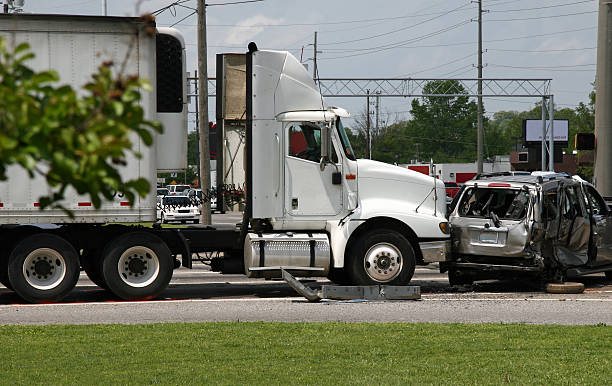
After a serious 18-wheeler accident, some of the most important evidence may be stored electronically or remain in the possession of the trucking company and other businesses involved in the operation.
Electronic Logging Device (ELD) records, electronic vehicle data, dash-camera footage, maintenance records, dispatch communications, and other information may help explain what happened before a collision. But some of this information may be subject to routine retention policies, overwritten through normal system operation, or affected if the truck is repaired or returned to service.
For this reason, an attorney investigating a Louisiana truck accident may send a preservation letter—sometimes called a spoliation letter—requesting that potentially relevant evidence be preserved.
What Is a Spoliation or Preservation Letter?
A spoliation or preservation letter is a written notice sent to a person or business that may possess evidence related to an accident or potential legal claim.
The letter identifies categories of potentially relevant evidence and requests that the recipient preserve them rather than destroy, alter, overwrite, dispose of, or otherwise make them unavailable.
The term spoliation generally refers to the destruction, alteration, concealment, or failure to preserve evidence that is relevant to pending or reasonably foreseeable litigation.
A preservation letter does not automatically create every legal duty or guarantee that every requested item must be retained indefinitely. Instead, it can provide important notice that a claim or litigation is anticipated and identify evidence that may be relevant.
In a commercial trucking case, this can be particularly important because much of the evidence needed to investigate the collision may be controlled by the motor carrier or another company rather than the injured person.
What Evidence Can a Truck Accident Preservation Letter Identify?
The evidence that should be preserved depends on the circumstances of the particular accident.
A detailed preservation letter may identify several categories of records and physical evidence.
Electronic Logging Device Records
An Electronic Logging Device (ELD) records information related to a commercial driver's driving time and duty status.
These records may help determine how long a driver had been driving, whether required off-duty periods were recorded, and whether the driver's records appear consistent with applicable Hours-of-Service requirements.
Federal regulations generally require motor carriers to retain records of duty status and supporting documents for six months.
Because these records can become important when investigating driver fatigue or Hours-of-Service violations, they may be specifically identified in a preservation request.
ECM and Other Electronic Vehicle Data
Commercial trucks contain electronic systems that control or monitor different vehicle functions.
Depending on the truck and its installed systems, electronically stored information may be available concerning vehicle speed, engine RPM, accelerator position, brake status, sudden deceleration events, or other vehicle activity.
This information is sometimes referred to generally as ECM or "black box" data, although not every truck records the same information and not all crash-related information is necessarily stored in the ECM itself.
A preservation letter may request that the truck and relevant electronic modules be maintained so that available information can be properly identified and, when appropriate, retrieved.
Dash-Camera and Other Video
Some commercial trucks have forward-facing, driver-facing, or other onboard cameras.
Video may also exist from nearby businesses, traffic systems, security cameras, or other vehicles.
When commercial fleet video exists, its retention period may depend on the company's system and policies. Relevant video should therefore be identified as early as possible.
Driver Qualification Records
Certain records concerning the commercial driver may also become relevant.
Depending on the case and applicable regulations, these records may include information concerning the driver's qualifications, licensing, driving history, medical qualification, training, and other required documentation.
The existence and required retention period of individual records can vary, so an attorney should identify the specific documents relevant to the investigation.
Inspection, Maintenance, and Repair Records
When a mechanical problem may have contributed to the collision, inspection and maintenance records can become particularly important.
These may include:
- maintenance histories;
- repair orders;
- inspection records;
- brake service records;
- tire replacement or repair records;
- invoices and work orders; and
- records concerning previously reported mechanical problems.
These documents can help determine the truck's condition before the collision and whether a known problem had been identified or repaired.
Dispatch and Driver Communications
Communications between the driver, dispatcher, motor carrier, broker, shipper, or other parties may help establish the timeline surrounding a trip.
Depending on the circumstances, relevant information could include dispatch messages, electronic communications, trip instructions, delivery schedules, or other company communications.
If distracted driving is suspected, cellphone evidence may also become relevant. Obtaining personal phone records or device information, however, generally requires appropriate legal process, consent, discovery, or other lawful authority.
Cargo and Loading Records
If cargo weight, loading, or securement may have contributed to the accident, a preservation request may also identify bills of lading, loading documents, weight records, cargo securement information, photographs, and other related records.
These documents can help determine who loaded the cargo, how it was secured, and whether cargo movement may have contributed to the collision.
Why Is Preserving the Truck Itself Important?
The physical truck may be evidence.
After a serious collision, investigators or qualified experts may need to examine the tractor, trailer, brakes, tires, steering components, lights, coupling equipment, or other parts of the vehicle.
The truck may also contain electronic modules that need to be identified and examined before repairs or other changes are made.
If the vehicle is repaired, dismantled, sold, or returned to service before an appropriate inspection can occur, its post-accident condition may change.
For that reason, a preservation letter may request that the truck, trailer, damaged components, and relevant electronic systems be preserved long enough to allow an appropriate inspection.
Why Should a Preservation Letter Be Sent Quickly?
There is no single deadline that applies to every type of trucking evidence.
Different records have different retention requirements, and electronic systems may store information differently.
For example, federal regulations generally require motor carriers to retain certain Hours-of-Service records for six months. Other records may have different federal retention periods, while some evidence—such as certain video or electronic information—may be governed by company policies or the technical limitations of the system.
Continued operation of a vehicle may also affect electronically stored information in some systems.
This means waiting can create unnecessary risk.
Sending a preservation notice early can help identify the evidence that may be relevant and place appropriate parties on notice that the information should not be routinely destroyed or altered while a claim is being investigated.
Does a Spoliation Letter Guarantee Evidence Will Be Preserved?
No.
A preservation letter is an important step, but it does not physically prevent someone from deleting a file, repairing a vehicle, or losing information.
It also does not guarantee that every item requested actually exists.
Instead, the letter documents the request for preservation and can become relevant if potentially important evidence later becomes unavailable.
If evidence is lost or destroyed, the legal consequences depend on factors such as what evidence existed, who controlled it, whether there was a duty to preserve it, why it became unavailable, how important it was to the case, and what law applies.
An attorney can evaluate whether additional legal action is necessary to protect particularly important evidence.
What Happens If Evidence Is Destroyed?
The consequences of lost or destroyed evidence are highly dependent on the circumstances.
Courts may consider whether a party had a duty to preserve the evidence, whether the evidence was intentionally destroyed or lost for another reason, whether the opposing party was prejudiced, and other relevant factors.
Depending on the applicable law and circumstances, spoliation issues may affect what evidence can be presented, what arguments may be made, or what instructions or sanctions a court considers appropriate.
However, a court does not automatically assume that a trucking company caused an accident simply because evidence is unavailable.
That is why it is more accurate to say that a preservation letter helps protect the opportunity to investigate evidence and document the request for its preservation rather than promising a particular sanction if evidence is lost.
Who May Receive a Truck Accident Preservation Letter?
The appropriate recipients depend on who possesses or controls potentially relevant evidence.
In a commercial truck accident case, preservation notices may potentially be directed to:
- the motor carrier;
- the truck or trailer owner;
- appropriate insurers or representatives;
- the driver;
- a maintenance or repair company;
- a cargo-loading company;
- a shipper or other business involved in the load;
- a telematics or technology provider; or
- another person or company believed to possess relevant evidence.
Not every case requires a letter to every possible party.
An attorney should first identify the businesses involved and determine which evidence each party may possess or control.
What Should a Truck Accident Preservation Letter Include?
A useful preservation letter should be specific enough to identify the accident and the categories of evidence that may be relevant.
Depending on the case, the letter may identify the date and location of the collision, the vehicles involved, the driver, the motor carrier, and the types of evidence that should be preserved.
The request may also address electronic records, physical evidence, photographs, video, company documents, communications, and information maintained by third-party systems.
A broad request saying only "preserve everything" may not be as useful as a carefully prepared request identifying evidence relevant to the circumstances of the particular accident.
Why Preservation Matters in a Louisiana Truck Accident Case
A commercial trucking case may ultimately depend on evidence the injured person never possessed.
The trucking company may have the driver's ELD records. A fleet-management provider may maintain telematics information. A camera system may contain video. Maintenance records may be held by a repair contractor. Electronic information may remain inside the truck itself.
Preserving this evidence gives attorneys and qualified experts a better opportunity to determine what happened before the collision, what the truck and driver were doing, and whether the conduct of any person or business contributed to the accident.
Injured in an 18-Wheeler Accident in Louisiana?
At Jacqueline Scott & Associates, we understand that investigating a serious commercial truck accident can require identifying and preserving evidence that may not remain available indefinitely.
When appropriate, we work to identify potentially relevant ELD records, electronic truck data, video, maintenance information, driver records, dispatch communications, cargo documents, and other evidence that may help explain how the collision occurred.
If you or a loved one has been injured in an 18-wheeler or commercial truck accident in Shreveport, Bossier City, or elsewhere in Louisiana, contacting an attorney early can help protect the opportunity to identify and preserve important evidence.
The sooner the investigation begins, the better the opportunity may be to determine what evidence exists, where it is located, and what steps should be taken to preserve it.