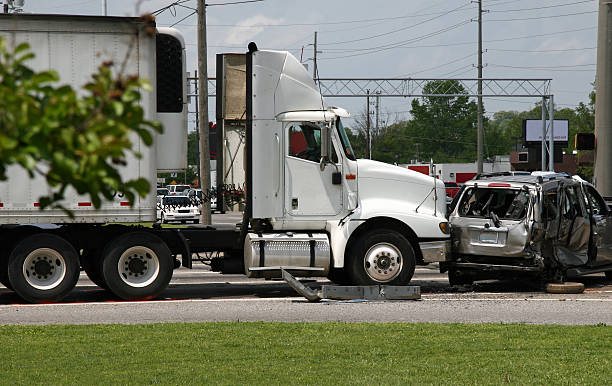
Commercial trucks operate under safety requirements that go beyond many of the rules that apply to ordinary passenger vehicles. Depending on the truck and its operation, federal regulations may govern how long a driver can remain behind the wheel, who is qualified to operate the vehicle, how the truck must be inspected and maintained, and how cargo must be secured.
These regulations can become an important part of investigating a serious 18-wheeler or commercial truck accident in Louisiana.
When a crash occurs, an attorney may examine whether applicable federal safety regulations were followed and whether a violation contributed to the collision.
What Is the FMCSA?
The Federal Motor Carrier Safety Administration (FMCSA) is an agency within the U.S. Department of Transportation responsible for regulating and providing safety oversight of commercial motor vehicles within its jurisdiction.
Its primary mission is to reduce crashes, injuries, and fatalities involving large trucks and buses.
The agency administers and enforces the Federal Motor Carrier Safety Regulations (FMCSRs), which establish safety requirements for covered commercial drivers, motor carriers, and vehicles.
These regulations address many areas of commercial trucking, including driver qualifications, Hours of Service, vehicle inspection and maintenance, drug and alcohol testing, and cargo securement.
Not every commercial vehicle or trucking operation is subject to exactly the same federal requirements. Whether a particular FMCSA regulation applies can depend on factors such as the vehicle, its weight, how it is being used, the type of cargo or passengers being transported, and whether the operation involves interstate commerce.
What FMCSA Regulations May Matter After a Truck Accident?
A serious commercial truck accident investigation may involve several different areas of federal regulation.
Hours-of-Service Rules
Federal Hours-of-Service (HOS) regulations limit how long covered commercial drivers may drive and remain on duty.
For many property-carrying commercial drivers, the general rule allows up to 11 hours of driving after 10 consecutive hours off duty. Drivers are also generally prohibited from driving beyond the 14th consecutive hour after coming on duty following the required off-duty period.
Additional rules address required breaks and limits on cumulative on-duty time.
After an accident, an attorney may examine the driver's Electronic Logging Device (ELD) records and other evidence to determine whether the driver was operating within applicable HOS limits.
Driver Qualifications
Motor carriers have responsibilities concerning the qualifications of the drivers they use.
Depending on the vehicle and operation, federal regulations may address a driver's age, licensing, driving ability, medical qualification, driving history, and other requirements.
Certain commercial drivers are required to hold a Commercial Driver's License (CDL), but not every driver or commercial vehicle regulated by FMCSA necessarily requires a CDL.
Motor carriers subject to the applicable regulations must also maintain certain records concerning their drivers. These records may become important when investigating whether a driver was properly qualified to operate the vehicle involved in a collision.
Drug and Alcohol Testing
Federal drug and alcohol testing requirements apply to certain commercial drivers, particularly drivers who are required to hold a CDL and operate commercial motor vehicles subject to the applicable regulations.
Depending on the circumstances, testing requirements can include pre-employment, random, reasonable-suspicion, post-accident, return-to-duty, and follow-up testing.
After a serious truck accident, an attorney may investigate whether applicable testing requirements were followed.
Vehicle Inspection, Repair, and Maintenance
Commercial motor carriers have responsibilities for keeping vehicles under their control in safe operating condition.
Federal regulations require covered vehicles to be systematically inspected, repaired, and maintained. Certain parts and accessories must be maintained in safe and proper operating condition.
After an accident involving a possible mechanical problem, an attorney may examine maintenance and inspection records involving components such as brakes, tires, steering systems, lights, and other equipment.
These records may help determine whether a mechanical condition existed before the crash and whether the trucking company knew or should have known about a safety problem.
Cargo Securement
Federal regulations also establish requirements for securing cargo transported by commercial vehicles.
Cargo must be secured in a manner designed to prevent it from shifting, leaking, spilling, blowing, or falling from the vehicle under conditions addressed by the regulations. Different types of cargo may also be subject to specific securement requirements.
Improperly loaded or secured cargo can affect a truck's stability and handling or create a hazard if cargo leaves the vehicle.
After an accident, bills of lading, loading records, photographs, weight information, and other documents may help determine how the cargo was loaded and secured.
Does Violating an FMCSA Regulation Prove Negligence?
Not necessarily.
A violation of an applicable federal safety regulation can be important evidence in a truck accident case, but an attorney must still determine which regulation applied, whether it was actually violated, and how that violation relates to the collision and resulting injuries.
For example, evidence that a driver exceeded an applicable Hours-of-Service limit may lead to further investigation into fatigue. Maintenance records showing unresolved brake problems may become important if braking performance contributed to the collision.
However, finding a regulatory violation does not automatically establish every element necessary to hold a driver, motor carrier, or another party legally responsible.
The facts of the accident and Louisiana law must also be considered.
What Records Can Be Reviewed After a Truck Accident?
Commercial trucking cases may involve considerably more records than an ordinary passenger-car accident.
Depending on the circumstances, an attorney may investigate:
- Electronic Logging Device (ELD) records;
- driver qualification records;
- Hours-of-Service information;
- drug and alcohol testing records, when applicable;
- inspection, repair, and maintenance records;
- driver vehicle inspection reports;
- dispatch and trip information;
- bills of lading and cargo records;
- GPS and telematics information;
- ECM or other electronically stored vehicle data;
- dash-camera or other available video;
- driver and dispatcher communications; and
- records concerning the motor carrier and vehicle.
No single document necessarily tells the entire story.
Comparing these records with the police report, photographs, witness statements, physical evidence, and electronic vehicle data can help identify inconsistencies and provide a clearer understanding of what happened.
How Can FMCSA Regulations Help in a Truck Accident Investigation?
Federal safety regulations can provide an important framework for evaluating the conduct of a commercial driver or motor carrier.
Suppose an investigation reveals that a driver had been operating beyond an applicable HOS limit before a collision. The attorney may then examine whether fatigue played a role.
If maintenance records show repeated brake problems before a crash involving an inability to stop, those records may help determine whether the truck was properly maintained and whether an unresolved mechanical condition contributed to the accident.
Similarly, if cargo shifted before a rollover, investigators may examine whether applicable cargo-securement requirements were followed.
The important question is not simply whether a regulation was violated. The investigation should determine what happened, why it happened, and whether the violation contributed to the collision or injuries.
Do FMCSA Regulations Apply to Every Truck?
No.
FMCSA regulations generally apply to commercial motor vehicles and motor carriers that fall within the agency's federal jurisdiction. Some regulations apply based on different definitions, vehicle weights, passenger capacity, hazardous-material transportation, interstate commerce, and other factors.
Certain operations may also qualify for exemptions or be governed by different requirements.
Louisiana also has state laws and regulations that may apply to commercial vehicles and intrastate operations.
For this reason, an attorney should determine which federal and state regulations actually applied to the truck, driver, and motor carrier involved in a particular accident rather than assuming every FMCSA regulation applies to every commercial vehicle.
What Happens When a Trucking Company Violates FMCSA Regulations?
FMCSA and other appropriate authorities may take enforcement action when covered motor carriers or drivers violate federal safety regulations.
Depending on the violation and circumstances, consequences can include civil penalties, orders affecting a carrier's operations, or other administrative or enforcement action.
A regulatory enforcement action is different from an injured person's civil claim.
In a personal injury case, evidence of a safety violation may become relevant when determining whether the driver, motor carrier, or another party failed to act reasonably and whether that conduct contributed to the accident.
Why Is Preserving Trucking Records Important?
Some of the evidence needed to determine whether federal safety regulations were followed may be held by the trucking company or another business.
After a serious collision, an attorney may send a preservation or spoliation letter identifying evidence that should be preserved.
Depending on the case, that may include ELD records, ECM or other electronic vehicle data, dash-camera footage, GPS or telematics information, maintenance records, inspection documents, driver qualification records, dispatch communications, cargo documents, and other relevant information.
Taking steps to preserve evidence early can help prevent important information from becoming unavailable during the investigation.
Injured in an 18-Wheeler Accident in Louisiana?
Commercial truck accident cases can involve federal regulations, state law, electronic evidence, company records, commercial insurance policies, and multiple potentially responsible parties.
At Jacqueline Scott & Associates, we investigate the circumstances surrounding serious commercial truck accidents, including whether applicable federal safety regulations were followed and whether violations may have contributed to the collision.
If you or a loved one has been injured in an 18-wheeler or commercial truck accident in Shreveport, Bossier City, or elsewhere in Louisiana, contacting an attorney early can help protect the opportunity to identify and preserve important evidence.
Understanding which regulations applied—and whether the driver or trucking company followed them—can be an important part of determining what happened and who may be legally responsible.