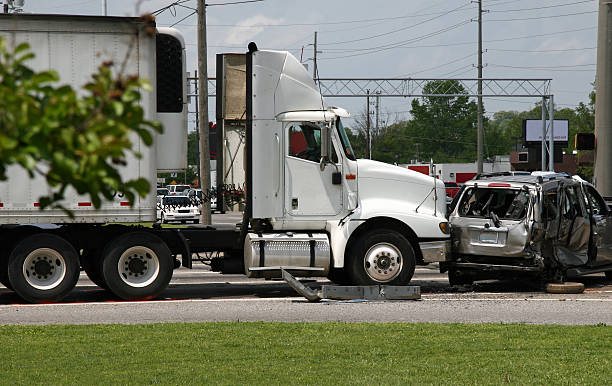
An accident involving an 18-wheeler can be very different from an ordinary car accident. Commercial trucks are larger and heavier, may be operated by companies with multiple layers of insurance and business relationships, and can be subject to federal and state safety requirements that do not apply to ordinary passenger vehicles.
A serious Louisiana 18-wheeler accident may also involve evidence that is not immediately available at the crash scene, including Electronic Logging Device (ELD) records, electronic vehicle data, maintenance records, driver qualification information, dispatch communications, and GPS or telematics information.
Understanding what evidence exists—and taking steps to preserve it—can be an important part of determining what happened and who may be legally responsible.
What Is a Louisiana 18-Wheeler Accident Claim?
An 18-wheeler accident claim may arise when a person suffers injuries or other legally recoverable damages because of a collision involving a commercial truck.
A fully loaded tractor-trailer operating under the general federal weight limit may weigh up to 80,000 pounds, although different limits or permits may apply in certain circumstances. The size and weight difference between a commercial truck and a passenger vehicle can contribute to severe injuries when a collision occurs.
Depending on the facts and Louisiana law, an injured person may seek compensation for damages such as:
- medical expenses;
- lost wages or loss of earning capacity;
- property damage;
- physical pain and suffering;
- mental anguish;
- disability or physical limitations; and
- other legally recoverable losses.
The damages available depend on the circumstances of the particular case.
Why Are 18-Wheeler Accidents Different From Car Accidents?
One major difference is the number of people and businesses that may be involved.
A commercial truck may involve a driver, motor carrier, tractor owner, trailer owner, shipper, broker, cargo-loading company, maintenance provider, or other business. Those parties do not automatically become liable simply because they were involved in the trucking operation, but their roles may need to be investigated.
Commercial trucking operations may also be subject to regulations administered by the Federal Motor Carrier Safety Administration (FMCSA).
Depending on the vehicle and operation, federal regulations may address areas such as:
- Hours of Service;
- driver qualifications;
- vehicle inspection and maintenance;
- drug and alcohol testing;
- cargo securement; and
- commercial vehicle operation.
Louisiana law may also apply.
Determining which regulations applied—and whether a violation contributed to the collision—can be an important part of investigating a commercial truck accident.
What Evidence Is Important After an 18-Wheeler Accident?
Truck accident investigations may involve evidence that does not exist in a typical passenger-car claim.
Electronic Logging Device Records
Many commercial drivers who are required to maintain records of duty status use an Electronic Logging Device (ELD).
An ELD records information related to driving time and duty status and can help determine when a truck was being driven and how long the driver had been operating.
After an accident, these records may be reviewed to determine whether the driver was operating within applicable Hours-of-Service limits.
However, an ELD is primarily a driver-hours and duty-status system. It should not be confused with other electronic systems that may contain information about the operation of the truck itself.
ECM and Other Electronic Vehicle Data
Commercial trucks contain electronic systems that monitor and control different vehicle functions.
An Engine Control Module (ECM) primarily controls and monitors engine operations. Depending on the truck, manufacturer, model, and installed systems, electronically stored information may also be available concerning vehicle speed, engine RPM, accelerator position, brake status, sudden deceleration events, or other vehicle activity.
Not every commercial truck records the same information.
When electronic vehicle data is available, qualified investigators or accident reconstruction experts may use it along with physical evidence to better understand what the truck was doing before or around the time of the collision.
GPS, Telematics, and Video
Commercial fleets may use GPS or telematics systems to monitor vehicles, routes, locations, and other operational information.
Some commercial trucks are also equipped with forward-facing or driver-facing cameras. Others may not be.
When available, this evidence can help investigators reconstruct the truck's movements and compare the electronic information with statements made after the collision.
Driver and Company Records
A trucking accident investigation may also involve company records.
Depending on the case, an attorney may seek:
- driver qualification records;
- inspection and maintenance records;
- dispatch information;
- bills of lading;
- cargo and loading documents;
- fuel and toll records;
- driver communications;
- training records; and
- other documents related to the truck and its operation.
These records may help determine whether the driver was qualified, whether the truck was properly maintained, how the trip was scheduled, and whether applicable safety requirements were followed.
Who Can Be Responsible for an 18-Wheeler Accident?
Responsibility depends on what caused or contributed to the collision.
Potentially responsible parties may include the truck driver if unsafe driving contributed to the accident.
A motor carrier or trucking company may also have potential responsibility depending on its relationship with the driver, its own conduct, and applicable law. Issues involving hiring, training, supervision, scheduling, driver qualifications, or vehicle maintenance may become relevant.
Other parties may also need to be investigated.
For example, a cargo-loading company may become relevant if improperly loaded or secured cargo contributed to a rollover or loss of control. A maintenance or repair company may become involved if faulty repair work contributed to a mechanical failure. A manufacturer may potentially be involved when a defective truck or component contributed to the collision.
An attorney should investigate the evidence before deciding who may be legally responsible.
Why Is Preserving Evidence Important?
Some trucking evidence may not remain available indefinitely.
Electronic information can sometimes be overwritten through normal system operation. Video may be retained for a limited period. A damaged truck may be repaired or returned to service. Business records can also become more difficult to obtain as time passes.
For these reasons, an attorney may send a preservation or spoliation letter notifying appropriate parties that evidence related to the collision should be preserved.
Depending on the circumstances, the request may include:
- ELD records;
- ECM and other electronic vehicle information;
- GPS or telematics records;
- dash-camera footage;
- maintenance and inspection records;
- driver qualification information;
- dispatch communications;
- cargo documents; and
- other relevant electronic or paper records.
A preservation letter does not guarantee that every requested item exists or will ultimately be available. It does, however, provide formal notice that potentially relevant evidence should be preserved.
What Should You Do After an 18-Wheeler Accident?
Your immediate health and safety should come first.
Call 911 and seek medical attention when necessary. Some injuries may not be immediately obvious at the accident scene, so obtaining appropriate medical evaluation is important.
If you can safely do so, photographs and videos may help document the scene. Consider photographing the vehicles, damage, roadway, skid or tire marks, debris, traffic signals or signs, and identifying information displayed on the commercial truck.
Obtain the driver's identifying and insurance information when possible, but also pay attention to the company name, USDOT number, license plate, tractor number, and trailer number displayed on the truck or trailer.
Witness contact information can also be valuable.
Keep copies of documents related to the accident, including medical bills, treatment records available to you, repair estimates, receipts, photographs, and communications concerning the claim.
Should You Give the Trucking Company's Insurance Adjuster a Statement?
After an accident, you may be contacted by an insurance adjuster or representative seeking information about what happened.
You should be careful about giving a recorded statement, signing a medical authorization, signing a release, or accepting a settlement before you understand what you are agreeing to and the extent of your injuries and damages.
Statements made shortly after a collision may later become relevant to the claim.
An attorney can communicate with insurers on your behalf and help you understand requests for information before you respond.
How Long Do You Have to File an 18-Wheeler Accident Claim in Louisiana?
Louisiana law places deadlines on personal injury claims.
The applicable deadline can depend on when the accident occurred and the particular circumstances of the case. Louisiana's prescriptive-period laws have changed in recent years, so injured people should not rely on general internet information or assume that the deadline in one case applies to another.
Waiting can also create problems even when the filing deadline has not expired.
Electronic evidence, video footage, witness memories, and trucking-company records may become more difficult to obtain over time.
Speaking with an attorney early allows the applicable deadline to be evaluated and gives the attorney an opportunity to begin identifying evidence that should be preserved.
What Compensation May Be Available After a Truck Accident?
The compensation available depends on the injuries, damages, fault, insurance coverage, applicable law, and other circumstances.
Potential damages may include past and future medical expenses, lost income, loss of earning capacity, property damage, pain and suffering, disability, and other losses recognized under Louisiana law.
No attorney can guarantee the value or outcome of a particular truck accident claim.
A proper evaluation requires reviewing the evidence, medical treatment, damages, insurance coverage, and circumstances surrounding the collision.
Why Choose Jacqueline Scott & Associates for a Louisiana Truck Accident Case?
A serious commercial truck accident requires more than simply exchanging insurance information and waiting for an adjuster to make an offer.
At Jacqueline Scott & Associates, we investigate the circumstances surrounding commercial truck accidents and work to identify the evidence needed to determine how the collision occurred and who may bear legal responsibility.
That investigation may include reviewing ELD records, electronic truck data, Hours-of-Service information, maintenance and inspection records, driver qualification information, company records, and other available evidence.
Our goal is to understand what happened, why it happened, and which individuals or businesses may be responsible under Louisiana law.
Talk to a Louisiana 18-Wheeler Accident Attorney
If you or a loved one has been injured in an 18-wheeler, tractor-trailer, semi-truck, or commercial truck accident in Shreveport, Bossier City, or elsewhere in Louisiana, early investigation can be important.
At Jacqueline Scott & Associates, we can evaluate the circumstances of the collision, identify potential sources of evidence, and determine which parties may bear legal responsibility.
Commercial trucking evidence can be complex and, in some situations, time-sensitive. Taking action early can help protect the opportunity to determine what happened and pursue the compensation available under Louisiana law.