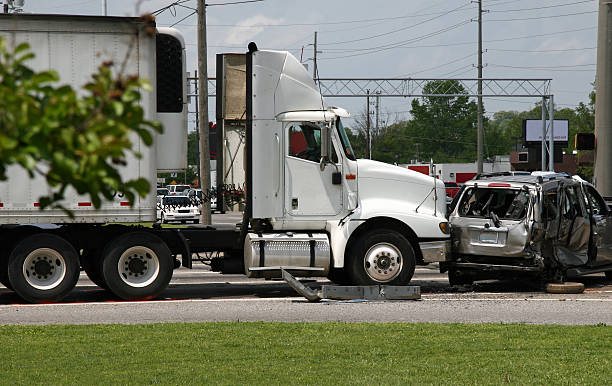
Commercial trucks travel long distances, carry heavy loads, and place significant demands on brakes, tires, steering systems, and other vehicle components. Keeping those vehicles properly inspected, repaired, and maintained is an important part of safe commercial trucking.
When a mechanical problem contributes to an 18-wheeler accident in Louisiana, an investigation may look beyond the driver's actions and examine the condition of the truck itself.
Maintenance records, inspection reports, repair orders, and the physical condition of the vehicle may help determine whether a mechanical problem existed before the collision, whether anyone knew about it, and whether the problem was properly addressed.
What Is Truck Maintenance Negligence?
Truck maintenance negligence generally refers to a failure to use reasonable care in inspecting, repairing, or maintaining a commercial vehicle when that failure contributes to an accident or injury.
Federal regulations also establish specific inspection, repair, and maintenance requirements for covered motor carriers and commercial vehicles.
Under 49 C.F.R. § 396.3, motor carriers generally must systematically inspect, repair, and maintain vehicles subject to the regulation and ensure that parts and accessories are in safe and proper operating condition.
The regulation addresses more than emergency repairs after something breaks. Motor carriers are expected to have systems for identifying and addressing vehicle conditions that may affect safe operation.
However, discovering a mechanical defect after an accident does not automatically establish negligence.
An investigation must determine what failed, why it failed, whether the problem should have been discovered or corrected, who was responsible for the vehicle or repair, and whether the condition contributed to the collision.
What Mechanical Problems Can Contribute to Truck Accidents?
Many different vehicle components can become relevant after a commercial truck accident.
Brake Problems
Commercial truck braking systems contain multiple components that must be properly inspected and maintained.
Depending on the vehicle, potential issues may include worn brake components, air-system problems, improper adjustment, damaged components, or other conditions that affect braking performance.
If braking performance is questioned after a collision, investigators may examine the physical brake system along with maintenance records, inspection reports, repair orders, and available electronic vehicle information.
The goal is to determine whether a brake problem existed and whether it affected the driver's ability to slow or stop the truck.
Tire Problems
Commercial truck tires operate under significant loads and can become dangerous when damaged, excessively worn, improperly inflated, or otherwise unsuitable for continued operation.
Federal regulations establish requirements concerning tire condition and tread depth.
After a tire-related accident, an investigation may examine the damaged tire, remaining tread, inflation history if available, maintenance records, prior inspection reports, and other evidence.
A tire failure does not automatically establish poor maintenance. Road hazards, manufacturing defects, loading conditions, and other causes may also need to be considered.
Steering and Suspension Problems
Steering and suspension components help a driver maintain control of a commercial vehicle.
Worn, loose, broken, or damaged components can potentially affect vehicle handling and stability.
When a steering or suspension problem is suspected, preserving the truck can be particularly important because a qualified expert may need to physically inspect the affected components before repairs are performed.
Lighting and Visibility Equipment
Commercial vehicles are subject to requirements concerning lamps, reflective devices, and other safety equipment.
Defective brake lights, turn signals, headlights, clearance lights, or required reflective material may become relevant depending on how an accident occurred.
For example, visibility issues may be particularly important in a nighttime collision involving a stopped or slowly moving trailer.
The investigation must determine whether a defect existed and whether it actually contributed to the collision.
What Does Federal Law Require for Truck Maintenance?
Federal regulations impose inspection, repair, and maintenance responsibilities on covered motor carriers.
Under 49 C.F.R. Part 396, motor carriers generally must systematically inspect, repair, and maintain covered vehicles.
The regulations also address periodic inspections and other inspection-related requirements.
Commercial vehicles subject to the federal periodic inspection requirement generally must be inspected at least once during the preceding 12 months, and documentation of the inspection must be maintained as required by federal law.
However, the federal regulations should not simply be described as requiring every driver to complete identical "daily pre-trip and post-trip inspection reports."
Drivers have inspection-related responsibilities, but the requirements concerning written Driver Vehicle Inspection Reports (DVIRs) depend on the type of operation and circumstances.
What Is a Driver Vehicle Inspection Report?
A Driver Vehicle Inspection Report (DVIR) is one type of record that may become important in a maintenance investigation.
Depending on the applicable requirements, a DVIR may document certain defects or deficiencies identified by a driver.
When a safety-related defect is reported, records concerning how the motor carrier responded may become important.
For example, if documents show that a braking problem was reported before a collision, an attorney may investigate:
What problem did the driver report?
When was it reported?
Who received the report?
Was the truck inspected afterward?
Was a repair performed?
Was the vehicle safe to operate when it returned to service?
Those facts may provide important evidence concerning the motor carrier's response to a known mechanical issue.
But the existence of a prior repair request does not automatically prove that the company caused the accident. The relationship between the reported condition and the collision still must be established.
What Maintenance Records Can Be Reviewed After a Truck Accident?
A maintenance investigation may involve records from several different sources.
Depending on the case, an attorney may seek:
- vehicle maintenance histories;
- inspection records;
- periodic inspection reports;
- available DVIRs;
- repair orders;
- mechanic work orders;
- parts invoices;
- brake service records;
- tire inspection and replacement records;
- roadside inspection reports;
- out-of-service records;
- records of reported defects;
- communications concerning repairs; and
- documents identifying who performed maintenance or repairs.
These records can help create a timeline of the truck's mechanical condition before the accident.
They may also identify third-party repair companies or other businesses whose work should be investigated.
Who Can Be Responsible for a Maintenance-Related Accident?
Responsibility depends on who had control over the vehicle, who was responsible for the maintenance or repair at issue, and what caused the mechanical failure.
The Motor Carrier
A motor carrier may have responsibilities under federal regulations for inspection, repair, and maintenance of vehicles under its control.
If evidence shows that the carrier failed to address a known or reasonably discoverable safety problem and that condition contributed to the collision, the company's conduct may become an important issue.
The Truck or Trailer Owner
The motor carrier operating a vehicle may not always own the tractor or trailer.
Depending on the ownership, lease agreement, and maintenance arrangements, the vehicle owner or another company may also have responsibilities that should be investigated.
A Maintenance or Repair Contractor
Commercial carriers may hire outside companies to perform inspections, maintenance, or repairs.
If a repair company performs work incorrectly and that faulty work contributes to a mechanical failure and accident, the repair company's conduct may also become relevant.
The fact that a third party performed the repair does not necessarily eliminate every responsibility of the motor carrier, nor does it automatically make the repair company liable.
The responsibilities and conduct of each party must be evaluated separately.
A Manufacturer
Sometimes a component fails even though it was properly maintained.
If the evidence indicates that a defective vehicle or component contributed to the accident, a manufacturer or another party in the product's chain of distribution may become part of the investigation.
This is why preserving failed components can be important before anyone repairs, discards, or alters them.
How Long Must Truck Maintenance Records Be Kept?
There is no single federal rule requiring every maintenance-related document to be kept for exactly the same amount of time.
For certain vehicle maintenance records required under 49 C.F.R. § 396.3, a motor carrier generally must retain the required records where the vehicle is housed or maintained for one year and for six months after the motor vehicle leaves the motor carrier's control.
Other inspection and maintenance records may be subject to different retention requirements.
The specific document and applicable regulation should therefore be identified before determining how long a record was required to be maintained.
Why Should Maintenance Evidence Be Preserved Quickly?
Maintenance-related evidence may exist in both physical and electronic form.
The truck may be repaired after the collision. Damaged parts may be replaced or discarded. Electronic information may change through continued vehicle operation. Records may eventually be disposed of under applicable retention policies.
For these reasons, an attorney may send a preservation or spoliation letter requesting that potentially relevant evidence be preserved.
Depending on the case, the request may identify:
- the tractor and trailer;
- brakes, tires, steering, or other damaged components;
- maintenance and repair histories;
- inspection reports;
- repair orders and invoices;
- photographs;
- electronic vehicle information;
- roadside inspection records; and
- communications concerning mechanical problems.
A preservation letter does not guarantee that every requested item exists or will ultimately be available. It also does not physically prevent a vehicle from being altered.
However, providing timely notice can be an important step in protecting potentially relevant evidence while the accident is investigated.
What Happens If a Truck Is Placed Out of Service?
Commercial vehicles may be placed out of service when inspectors identify conditions that meet applicable out-of-service criteria.
An out-of-service designation can restrict operation of the vehicle until the condition that resulted in the order has been addressed as required.
After an accident, prior roadside inspection and out-of-service records may become important.
For example, if the truck previously had safety-related violations involving the same component that later becomes an issue in the collision, an attorney may investigate how the motor carrier responded to those earlier findings.
A prior violation does not automatically establish responsibility for a later accident, but it may provide relevant information about the vehicle's history and the carrier's maintenance practices.
Does a Maintenance Violation Prove the Trucking Company Caused the Accident?
Not automatically.
A federal maintenance violation may be important evidence, but an attorney still needs to establish how the violation relates to the accident.
For example, records might establish that a truck had a brake defect. The investigation would still need to determine whether the defect existed at the relevant time and whether it contributed to the driver's inability to stop.
Likewise, a tire may fail during a collision without negligent maintenance being the cause.
Accident reconstruction, physical inspection, maintenance records, electronic data, photographs, and expert analysis may all be necessary to determine what occurred.
The important questions are:
What failed? Why did it fail? Who was responsible for addressing it? And did that failure contribute to the collision?
Injured in an 18-Wheeler Accident in Louisiana?
A serious commercial truck accident should not automatically be treated as driver error.
When a mechanical problem may have contributed to a collision, investigating the truck's inspection, repair, and maintenance history can help determine whether the vehicle was safe to be on the road.
At Jacqueline Scott & Associates, we investigate the circumstances surrounding serious commercial truck accidents, including maintenance and inspection records, electronic vehicle data, driver records, company practices, and other available evidence that may help determine what happened and who may be legally responsible.
If you or a loved one has been injured in an 18-wheeler or commercial truck accident in Shreveport, Bossier City, or elsewhere in Louisiana, beginning the investigation early can help protect the opportunity to inspect the vehicle and preserve important evidence.
A careful review of the truck's condition and maintenance history can help determine whether a mechanical problem—and the failure to properly address it—contributed to the accident.