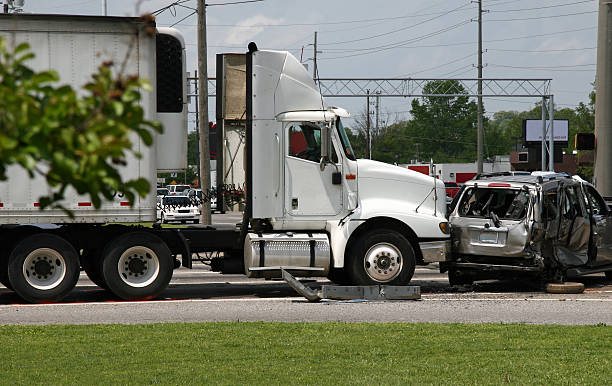
Driving a commercial truck requires sustained attention, good judgment, and the ability to react quickly to changing traffic conditions. When a truck driver becomes fatigued, those abilities may be affected.
Fatigue can become especially dangerous when the driver is operating a large tractor-trailer at highway speeds. A delayed reaction, missed traffic signal, unsafe lane movement, or failure to recognize stopped traffic can have serious consequences.
After a Louisiana 18-wheeler accident, investigating whether driver fatigue played a role may require looking beyond the crash report. Electronic Logging Device (ELD) records, work schedules, dispatch communications, electronic vehicle data, and other evidence may help establish what the driver was doing in the hours leading up to the collision.
What Is Truck Driver Fatigue?
Truck driver fatigue generally refers to physical or mental tiredness that can interfere with a driver's ability to safely operate a commercial vehicle.
A fatigued driver may have difficulty remaining alert, recognizing hazards, making decisions, or reacting quickly enough when road conditions change.
Fatigue can result from many different circumstances, including:
- insufficient sleep;
- long periods of driving or working;
- irregular work schedules;
- overnight driving;
- disrupted sleep patterns;
- demanding delivery schedules;
- physical or mental exhaustion; or
- medical or sleep-related conditions.
Fatigue is not necessarily the same thing as violating federal Hours-of-Service regulations.
A driver can be within the applicable driving-hour limits and still be too tired to safely operate a commercial vehicle.
That distinction can be important after a serious truck accident.
What Does Federal Law Say About Driving While Fatigued?
Federal regulations specifically address fatigued commercial drivers.
Under 49 C.F.R. § 392.3, a driver generally may not operate a commercial motor vehicle, and a motor carrier generally may not require or permit a driver to operate one, when the driver's ability or alertness is so impaired—or likely to become impaired—by fatigue, illness, or another cause that it is unsafe for the driver to begin or continue operating the vehicle.
This requirement is separate from the federal Hours-of-Service regulations.
Hours-of-Service rules establish limits on driving and on-duty time for covered commercial drivers. For many property-carrying drivers, federal regulations generally permit up to 11 hours of driving after 10 consecutive hours off duty and prohibit driving beyond the applicable 14-hour driving window.
But staying within those limits does not automatically establish that a driver was sufficiently rested to drive safely.
If a driver becomes dangerously fatigued before reaching the maximum allowable driving time, the fact that additional driving hours technically remained does not necessarily make it safe to continue.
How Can Fatigue Affect a Truck Driver?
Fatigue can affect drivers differently, and an accident investigation should not assume a particular behavior was caused by fatigue without supporting evidence.
However, fatigue may affect abilities that are important to safe commercial driving.
Slower Reactions
A tired driver may take longer to recognize a hazard and respond appropriately.
In a commercial truck, additional reaction time can be significant because large trucks generally require more distance to slow or stop than passenger vehicles under similar conditions.
Reduced Attention
Fatigue may make it more difficult for a driver to continuously monitor surrounding traffic, traffic signals, road conditions, and changing hazards.
A driver who loses focus for even a short period may fail to notice slowing or stopped traffic ahead.
Poor Decision-Making
Fatigue can interfere with judgment.
A tired driver may misjudge following distance, traffic speed, a safe opportunity to change lanes, or the amount of time available to respond to a developing hazard.
Lane-Position Problems
A fatigued driver may have difficulty maintaining consistent lane position.
Evidence that a truck repeatedly crossed lane markings, traveled onto the shoulder, or otherwise had difficulty maintaining its lane may become relevant to an investigation, although those movements can have causes other than fatigue.
Microsleep
Severe drowsiness can sometimes result in brief, involuntary periods of sleep known as microsleep.
At highway speeds, even a brief loss of awareness can result in a vehicle traveling a substantial distance without the driver's full attention.
However, investigators should not assume that a driver experienced a microsleep simply because the driver failed to brake or react. Additional evidence is needed to determine what most likely occurred.
How Do Attorneys Investigate Truck Driver Fatigue?
Fatigue is not always something that can be established from one record.
A careful investigation may involve reconstructing the driver's activities before the collision.
Electronic Logging Device Records
An ELD can provide information about the driver's driving time and duty status.
Attorneys may review these records to determine how long the driver had been driving, when off-duty periods were recorded, and whether applicable Hours-of-Service requirements were followed.
ELD records can be important, but they do not directly measure whether a driver was tired or how much the driver actually slept during an off-duty period.
Dispatch and Work Records
Dispatch information can help establish the driver's schedule and workload.
Records may show when a driver received a load, where the driver was expected to travel, pickup and delivery times, and communications between the driver and dispatcher.
If a driver reported being tired or needing rest, communications concerning that report may become particularly important.
Fuel, Toll, and Trip Records
Fuel receipts, toll information, bills of lading, delivery records, GPS or telematics information, and other time-stamped records can help reconstruct the driver's movements.
These records may also be compared with the driver's ELD information to determine whether the different sources tell a consistent story.
Electronic Vehicle Data
Depending on the truck and its systems, electronic vehicle information may provide data concerning vehicle speed, brake status, accelerator position, or other activity around the time of a triggering event.
This information may help establish whether the driver slowed or reacted before the collision.
However, a lack of recorded braking does not automatically prove the driver was asleep or fatigued. Distraction, visibility, mechanical issues, an unexpected hazard, or other circumstances may also need to be considered.
Video and Witness Evidence
Dash-camera footage, surveillance video, witness statements, and observations made after the collision may also become relevant.
If available video shows the driver's behavior or the truck's movement before the collision, it can be compared with the other evidence.
The goal is to evaluate the evidence together rather than relying on a single fact to conclude that fatigue caused the crash.
Can a Driver Be Fatigued Without Violating Hours-of-Service Rules?
Yes.
This is one of the most important distinctions in a truck fatigue case.
Hours-of-Service compliance tells investigators whether a driver was operating within certain federal time limits. It does not necessarily tell investigators whether the driver was adequately rested.
A driver's log might show a qualifying off-duty period, but an ELD does not generally establish that the driver actually slept throughout that time.
Likewise, a driver may have several hours remaining under the applicable HOS limit but become too fatigued to safely continue driving.
For this reason, an investigation into fatigue should consider both HOS compliance and the driver's actual circumstances before the accident.
Can a Trucking Company Be Responsible for Driver Fatigue?
Depending on the facts, the motor carrier's conduct may also need to be investigated.
Federal regulations generally prohibit a motor carrier from requiring or permitting a driver to operate a commercial vehicle when the driver's alertness is sufficiently impaired by fatigue or illness to make continued operation unsafe.
An attorney may therefore examine company practices and communications to determine what the motor carrier knew and what instructions were given to the driver.
Relevant evidence may include:
- dispatch communications;
- delivery schedules;
- driver complaints or reports;
- company safety policies;
- Hours-of-Service records;
- prior violations;
- training materials; and
- communications between the driver and supervisors.
Evidence that a company created a demanding schedule does not automatically establish liability.
The investigation must determine what happened, what the company knew or should have known, whether applicable safety requirements were violated, and whether the conduct contributed to the collision.
Does Fatigue Automatically Prove Who Caused the Accident?
No.
Even if evidence suggests that a driver was tired, an attorney must still determine whether fatigue contributed to the collision.
Similarly, an Hours-of-Service violation does not automatically prove that fatigue caused an accident.
A complete investigation may examine the driver's actions, physical evidence, witness statements, video footage, electronic truck data, road conditions, vehicle condition, and other possible causes.
The purpose is to establish a connection between the driver's condition or conduct and the collision—not simply to show that the driver had worked a long day.
Why Should Fatigue Evidence Be Preserved Quickly?
Some evidence that may help establish a driver's schedule and activities is held by the trucking company or third-party technology providers.
Electronic information may be subject to retention periods or overwritten through normal operation. Video may also be retained for only a limited time.
An attorney may therefore send a preservation or spoliation letter requesting that potentially relevant evidence be preserved.
Depending on the case, that request may include:
- ELD records;
- dispatch communications;
- GPS and telematics information;
- dash-camera footage;
- electronic vehicle data;
- driver schedules;
- trip and delivery information;
- fuel and toll records; and
- other records concerning the driver's activities before the accident.
A preservation letter does not guarantee that every requested record exists or will ultimately be available. However, identifying potentially relevant evidence early can help protect the opportunity to investigate whether fatigue played a role.
Injured in an 18-Wheeler Accident in Louisiana?
Determining whether driver fatigue contributed to an 18-wheeler accident can require more than simply counting the driver's hours.
At Jacqueline Scott & Associates, we investigate the circumstances surrounding serious commercial truck accidents, including the driver's Hours-of-Service records, work schedule, electronic records, company communications, and other available evidence that may help determine whether fatigue contributed to the collision.
If you or a loved one has been injured in an 18-wheeler or commercial truck accident in Shreveport, Bossier City, or elsewhere in Louisiana, beginning the investigation early can help protect the opportunity to identify and preserve important evidence.
A careful review of the driver's hours, activities, electronic records, and trucking-company practices can help determine what happened and who may be legally responsible.