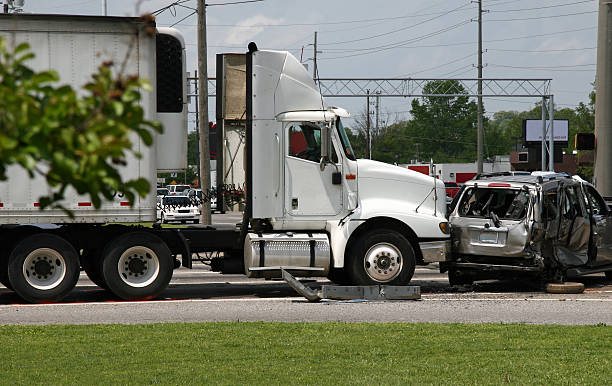
After an ordinary car accident, the investigation often focuses primarily on the drivers involved. An 18-wheeler accident can be different.
Commercial trucking involves drivers, motor carriers, vehicle owners, maintenance companies, cargo loaders, manufacturers, and other businesses. Depending on what caused the collision, one or several parties may bear legal responsibility.
Identifying the potentially responsible parties is an important part of investigating a Louisiana truck accident because the person behind the wheel may not be the only person or company whose actions contributed to the crash.
What Does Liability Mean in a Truck Accident Case?
Liability refers to legal responsibility for damages resulting from an accident.
To determine who may be responsible after a commercial truck accident, an attorney investigates how the crash happened and whose conduct contributed to it.
For example, a collision may initially appear to have been caused by a truck driver who could not stop in time. Further investigation could reveal that the truck had a braking problem, that required maintenance had not been performed, or that another company performed faulty repair work.
That can change the scope of the case.
Instead of assuming the driver alone caused the accident, a thorough investigation looks at the individuals and businesses involved in putting the truck on the road.
Who May Be Responsible for an 18-Wheeler Accident?
The answer depends on the facts of the particular accident. Potentially responsible parties may include:
The Truck Driver
The commercial driver is often one of the first people investigated after an 18-wheeler accident.
A driver may potentially be responsible when careless or unsafe driving contributes to a collision. Examples may include:
- speeding or driving too fast for conditions;
- following another vehicle too closely;
- distracted driving;
- unsafe lane changes;
- failing to yield;
- running a traffic signal;
- driving while impaired;
- operating while fatigued; or
- violating applicable Hours-of-Service requirements.
An investigation may include the driver's statements, Electronic Logging Device (ELD) records, driving history, available video, electronic vehicle information, witness statements, and other evidence.
The Motor Carrier or Trucking Company
The trucking company or motor carrier may also be an important part of the investigation.
Depending on the facts and applicable law, a motor carrier may face liability based on the driver's conduct or based on the company's own actions or failures.
Potential issues may include:
- hiring or retaining an unqualified driver;
- inadequate training or supervision;
- failing to comply with applicable driver qualification requirements;
- unsafe dispatch or scheduling practices;
- failing to properly inspect, repair, or maintain vehicles; or
- permitting unsafe practices to continue.
Company records can therefore be just as important as the driver's records.
An attorney may examine hiring documents, driver qualification information, safety policies, training records, dispatch communications, maintenance records, and other evidence to determine whether the company's conduct contributed to the accident.
What If the Truck Driver Is an Independent Contractor?
The words "independent contractor" do not automatically answer the liability question.
Commercial trucking relationships can be complicated. A driver may own a tractor, lease equipment to a motor carrier, operate under another company's authority, or work under an arrangement that is described as independent contracting.
Whether a motor carrier or another company can be held responsible requires an examination of the actual relationship, applicable federal regulations, contracts, control over the operation, ownership or leasing arrangements, and Louisiana law.
For that reason, an injured person should not assume that a trucking company has no potential responsibility simply because the driver is described as an independent contractor.
The relationship should be investigated.
The Truck or Trailer Owner
The company operating the truck may not always own the tractor or trailer.
Commercial trucking frequently involves leased equipment and business relationships between different companies.
Depending on the circumstances, the owner or lessor of a tractor or trailer may become relevant to the investigation, particularly when questions involve maintenance, equipment condition, leasing arrangements, or responsibility for the vehicle.
Ownership alone does not automatically make a party liable. The attorney must determine what responsibilities that party had and whether its conduct contributed to the accident.
Cargo Loaders and Shippers
Cargo can play a major role in the safe operation of a commercial truck.
Improperly loaded or secured cargo may shift during transportation, affect the truck's stability, contribute to a rollover, or fall from the vehicle and create a hazard for other motorists.
Depending on who was responsible for loading or securing the cargo, a shipper, loading company, warehouse, motor carrier, driver, or another party may become part of the investigation.
Evidence may include bills of lading, loading documents, photographs, weight information, cargo securement records, surveillance footage, and testimony from the people who loaded or inspected the shipment.
The important question is who had responsibility for the cargo and whether that party's actions contributed to the collision.
Maintenance and Repair Companies
Motor carriers sometimes use outside companies to inspect, maintain, and repair commercial vehicles.
If a mechanical problem contributed to an accident, an attorney may investigate who was responsible for inspecting or repairing the affected component.
For example, if brake failure is suspected, maintenance records may show when the braking system was last inspected, what problems were identified, what repairs were recommended, and what work was actually performed.
If a third-party repair company performed faulty work and that work contributed to the accident, the repair company may potentially bear some responsibility.
However, the existence of a mechanical failure does not automatically mean the repair shop was negligent. The cause of the failure must be investigated.
Truck and Parts Manufacturers
Some truck accidents involve defective vehicles or components rather than—or in addition to—driver error.
Depending on the circumstances, a manufacturer or other party in the product's chain of distribution may become involved in a product liability claim.
Potential defects could involve components such as tires, steering systems, brakes, coupling equipment, or other vehicle parts.
These cases may require engineers or other qualified experts to inspect the vehicle and determine whether a product was defective and whether that defect contributed to the accident.
That is another reason preserving the truck and damaged components after a serious collision can be important.
Other Drivers or Businesses
Not every accident involving an 18-wheeler is caused entirely by the truck driver or trucking company.
Another motorist may contribute to the collision. A contractor may create an unsafe roadway condition. A business responsible for a particular aspect of the trucking operation may also play a role.
The purpose of the investigation is not to assume who should be blamed. It is to identify everyone whose conduct may have contributed to the accident and evaluate their responsibility under the law.
How Do Attorneys Determine Who May Be Responsible?
Identifying the responsible parties often requires examining evidence from several different sources.
Depending on the accident, an investigation may include:
- ELD and Hours-of-Service records;
- ECM or other electronic truck data;
- GPS and telematics information;
- dash-camera or surveillance footage;
- driver qualification records;
- dispatch communications;
- maintenance and inspection records;
- bills of lading and cargo documents;
- loading and weight records;
- employment, lease, and operating agreements;
- photographs and measurements from the accident scene;
- witness statements; and
- police and investigative reports.
The relationships between the businesses involved may also need to be examined.
The name displayed on the side of the truck does not necessarily identify every company involved in its operation.
What Happens If More Than One Party Is at Fault?
Louisiana law allows fault to be allocated among multiple people or entities whose conduct caused or contributed to an injury.
For accidents governed by Louisiana's current comparative-fault law, the percentage of fault attributable to each person who caused or contributed to the injury is determined.
This makes identifying all potentially responsible parties particularly important.
Under Louisiana law, a joint tortfeasor generally is not responsible for damages attributable to another tortfeasor's percentage of fault. Instead, each party is generally responsible according to the degree of fault assigned to that party.
The injured person's own conduct may also be considered. Under Louisiana law applicable beginning January 1, 2026, a person who is 51% or more at fault generally cannot recover damages. If the injured person is less than 51% at fault, the recoverable damages are generally reduced according to that person's percentage of negligence.
The application of these rules depends on the facts and law governing the particular accident.
Why Is Identifying Every Potentially Responsible Party Important?
Serious truck accidents can result in significant injuries, medical expenses, lost income, property damage, and long-term effects on an injured person's life.
Determining responsibility requires more than looking at who received a traffic citation.
For example, a driver may have made the final mistake that caused a collision, while an investigation reveals that another party's conduct also contributed to the circumstances that led to the crash.
Identifying those relationships can help an attorney understand how the accident occurred, who may bear legal responsibility, and what insurance coverage or other sources of recovery may apply.
The goal is not simply to name as many defendants as possible. It is to identify the parties that the evidence and law support holding responsible.
Why Should a Truck Accident Be Investigated Quickly?
Important evidence in a commercial trucking case may be controlled by the trucking company or other businesses.
Electronic information can be overwritten. Vehicles can be repaired or returned to service. Video footage may be deleted under ordinary retention policies, and other records can become more difficult to locate as time passes.
An attorney may send preservation notices requesting that relevant evidence be maintained.
Depending on the case, that evidence may include the truck itself, ECM or other electronic data, ELD records, dash-camera footage, dispatch communications, maintenance records, cargo documents, driver records, and other electronically stored information.
Preserving this evidence can help determine not only what happened, but also who may be responsible for it.
Injured in an 18-Wheeler Accident in Louisiana?
Determining liability after a commercial truck accident can require investigating much more than the driver.
At Jacqueline Scott & Associates, we investigate the people, companies, records, and electronic evidence surrounding serious commercial truck accidents to determine what happened and identify the parties that may bear legal responsibility.
If you or a loved one has been injured in an 18-wheeler or commercial truck accident in Shreveport, Bossier City, or elsewhere in Louisiana, contacting an attorney early can help protect the opportunity to identify and preserve important evidence.
A thorough investigation can help determine whether responsibility rests with the driver, motor carrier, another company, or multiple parties involved in the trucking operation.